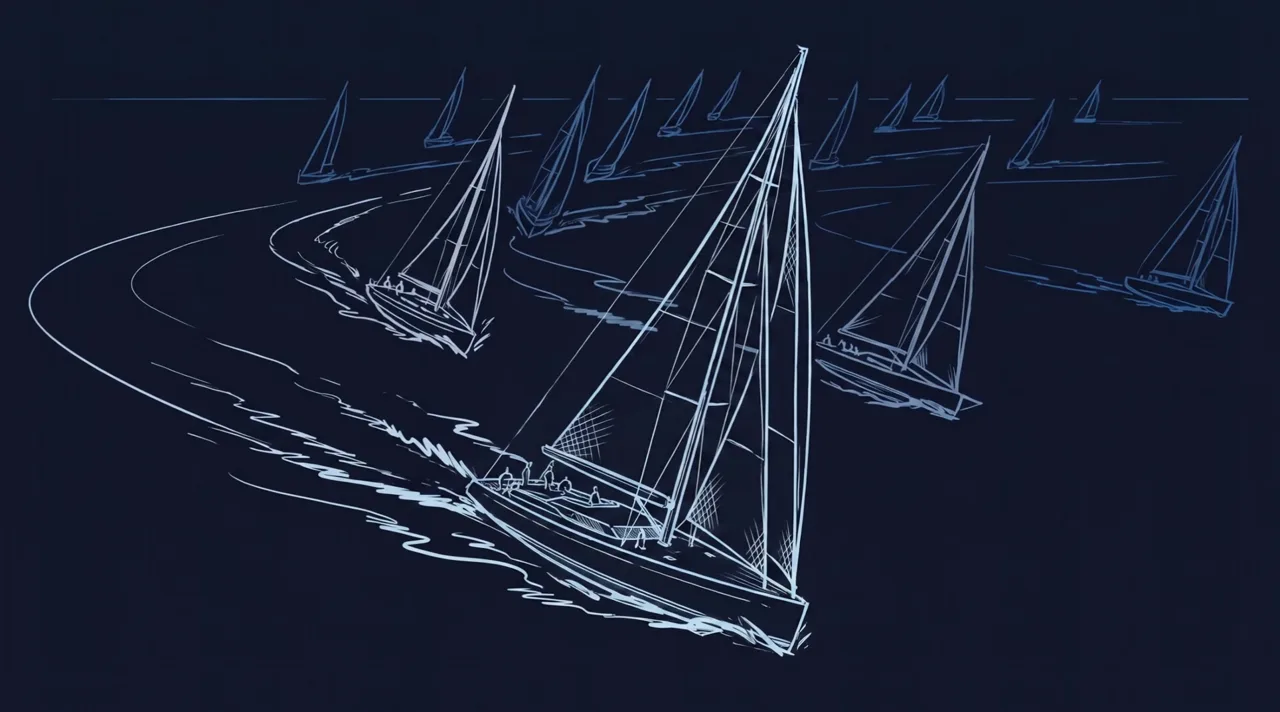
A whole fleet, ashore.
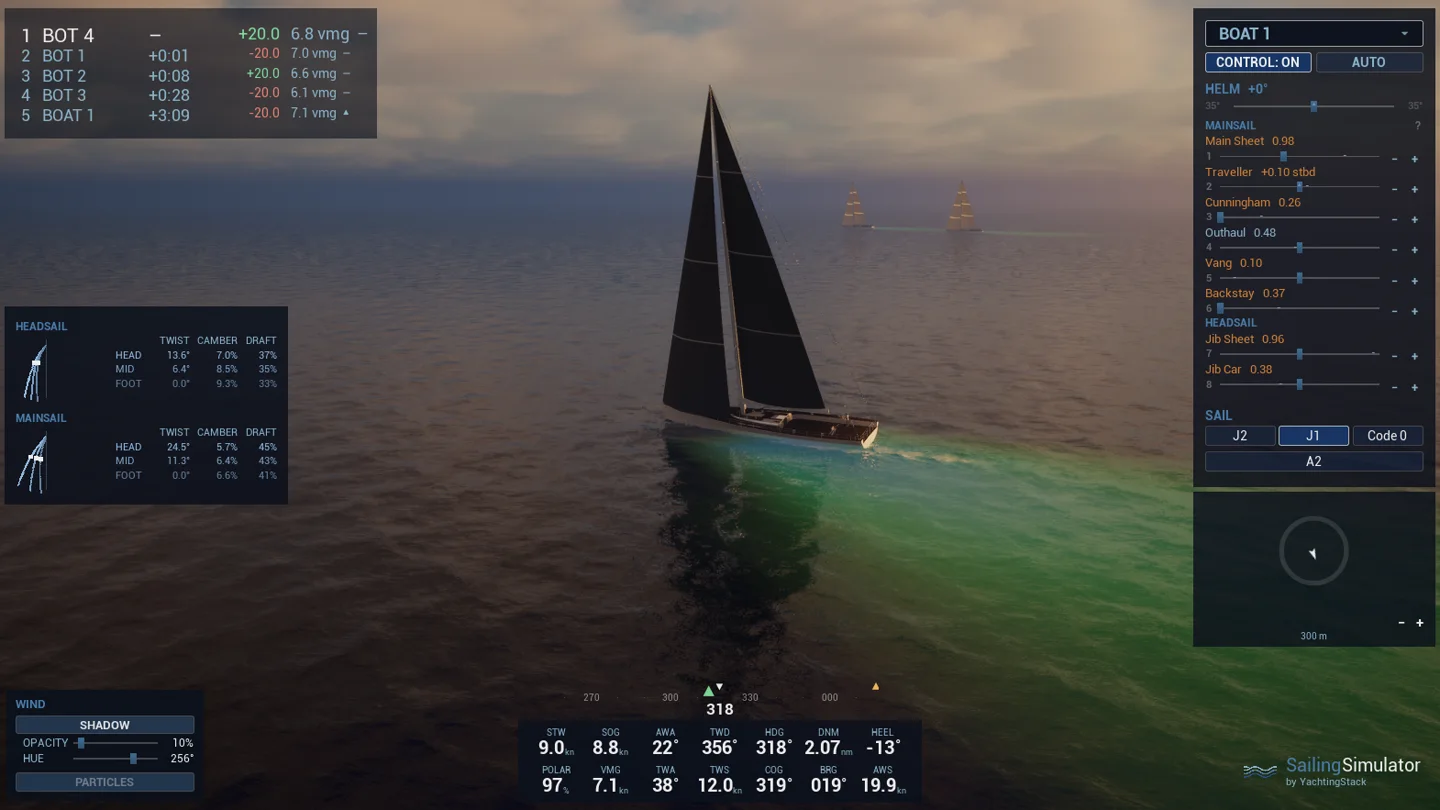
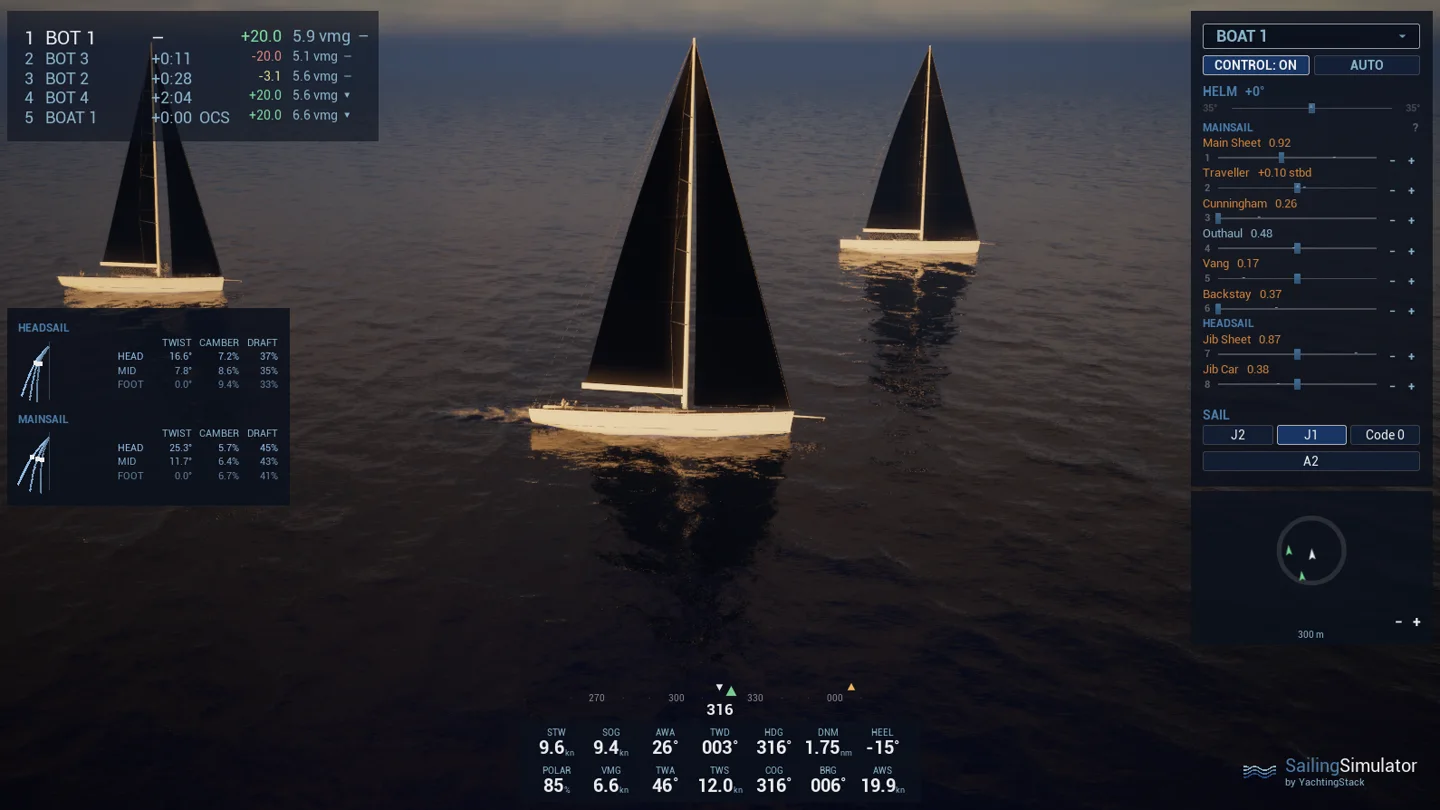
Several boats on the same course, a real person in every seat, driven by the same engines that read a real yacht.
Rehearse the regatta ashore.
The same engines that read a real yacht’s instruments also drive our simulator, so a crew can sail a regatta on land — every role, every manoeuvre — and replay it exactly afterwards.
- Race it, and be judged on itTake the helm on a windward–leeward course against other boats, scored on the racing rules: start sequence, marks, right of way, penalty turns, finish.
- Your own role, trained for youEvery position aboard has its own place in the session. Each person trains on the job they actually do rather than a generic view of the boat, and the whole crew sails the same race at the same time.
- Your yacht, your proceduresThe 3D model and the manoeuvre procedures can be adapted to a specific vessel, so a crew trains on their own boat, running their own SOPs — not a stand-in.
- Or one boat eachSeveral sailors can each take their own boat and race one another, over a local network or over the cloud.
In development. It runs on a machine in the room today, and it trains crews — it is not certified training.
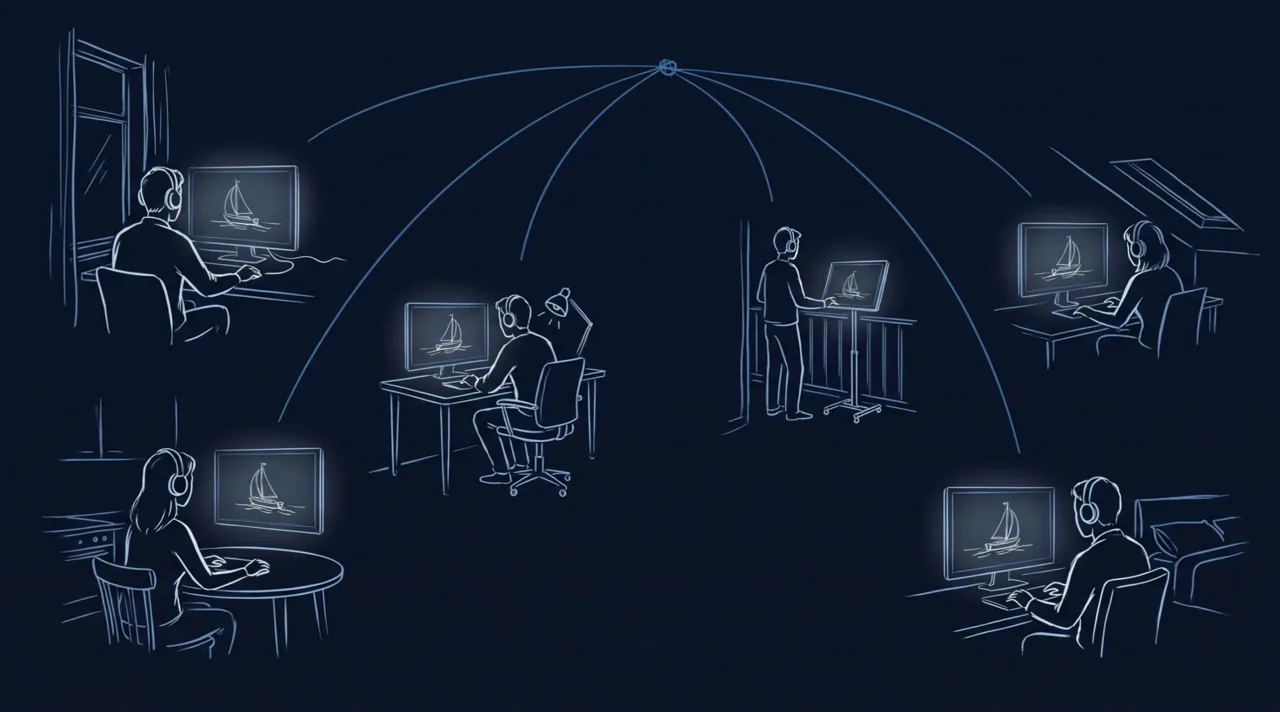
Or from wherever the crew happens to be.
The same session, joined over the cloud — a crew scattered across ports and time zones sailing the same leg together.
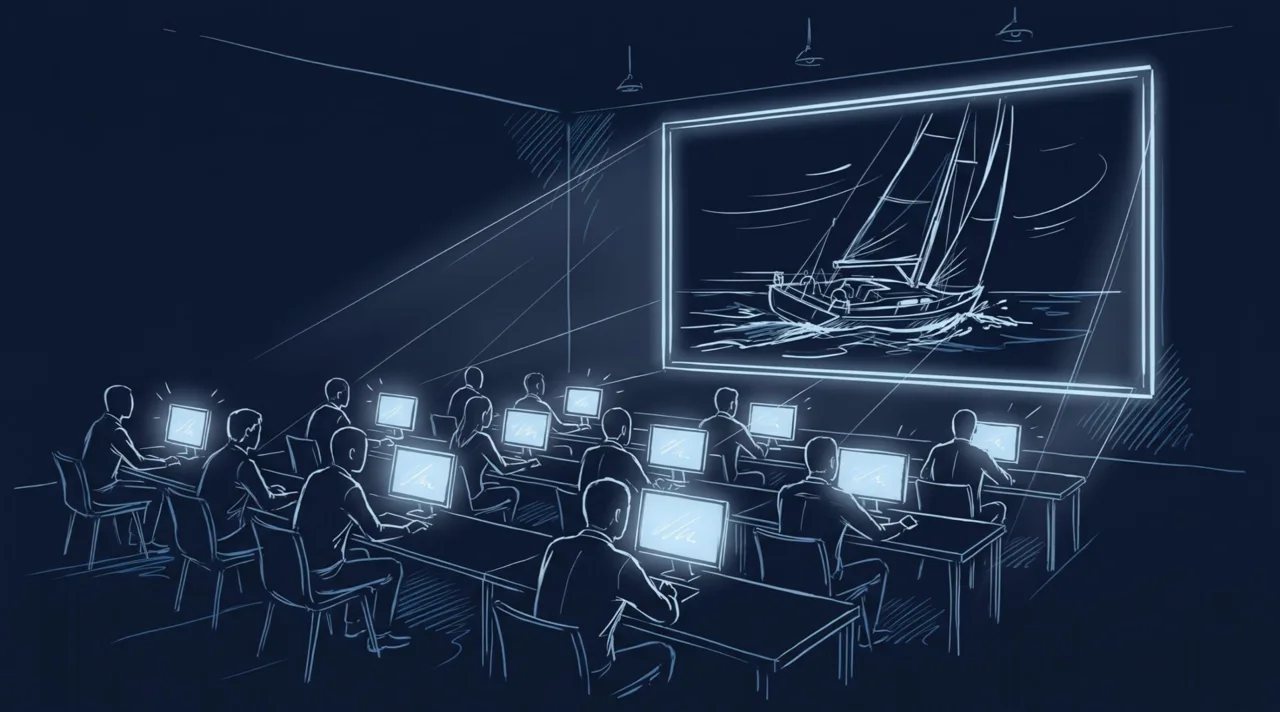
A coordinated crew, ashore.
Curated AI instruction, real instrument simulation, and the weight of analytics behind it — so a crew comes to understand their role, their vessel, and themselves.
A great opportunity to learn together.
It is enjoyable, and that is part of why it works, but everything in it is there because it changes what a crew does on the water. A simulation built for performance and for safety, sailed together.
- Briefed, sailed, debriefedA briefing before you start, the sailing itself, then a debrief against the data — with AI intelligence running through all three.
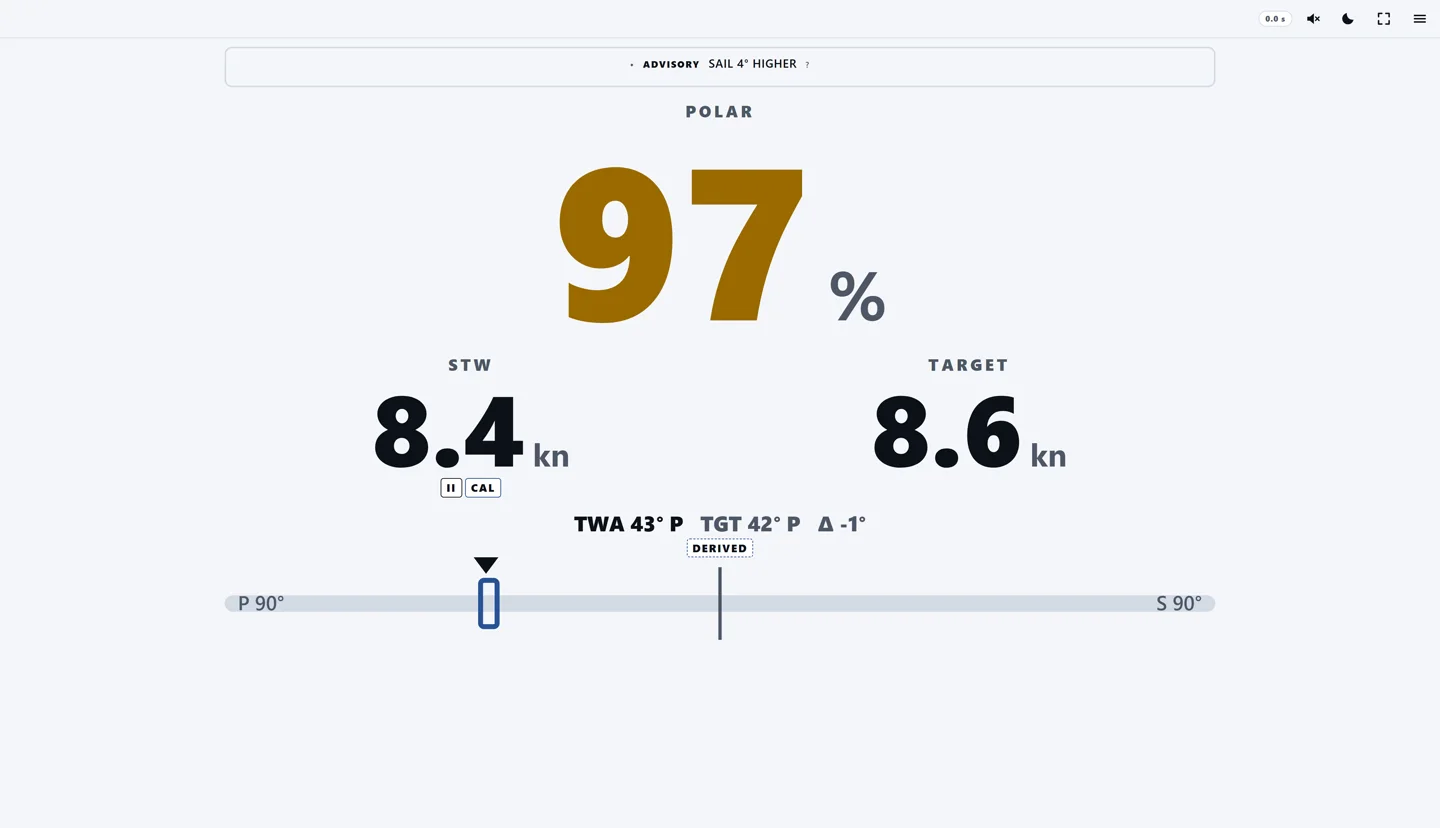
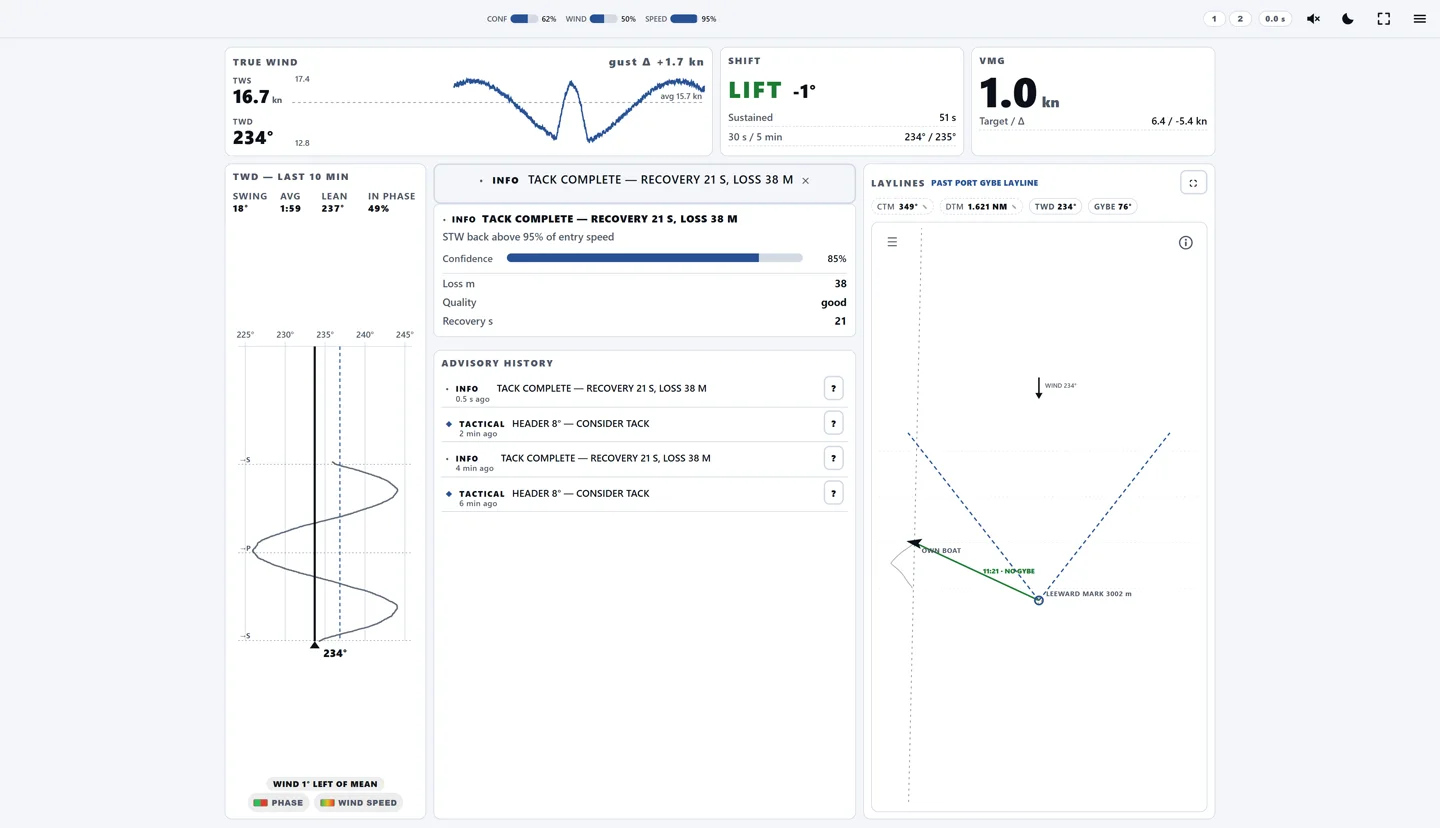
- The same code path as a real boatThe onboard product reads the simulator through exactly the pipeline it uses on a real yacht. What a crew trains against is what they will see on the water.
- Advanced post-race analyticsManoeuvres and starts, tacking speed, polars, race course strategy, and crew collaboration and timing — measured after the session rather than argued over.
- Performance from real certificatesBoat speed comes from published ORC and ORCsy rating certificates, with the source stamped into every polar file — not numbers we invented to make it feel fast.
What each sailor actually sees.
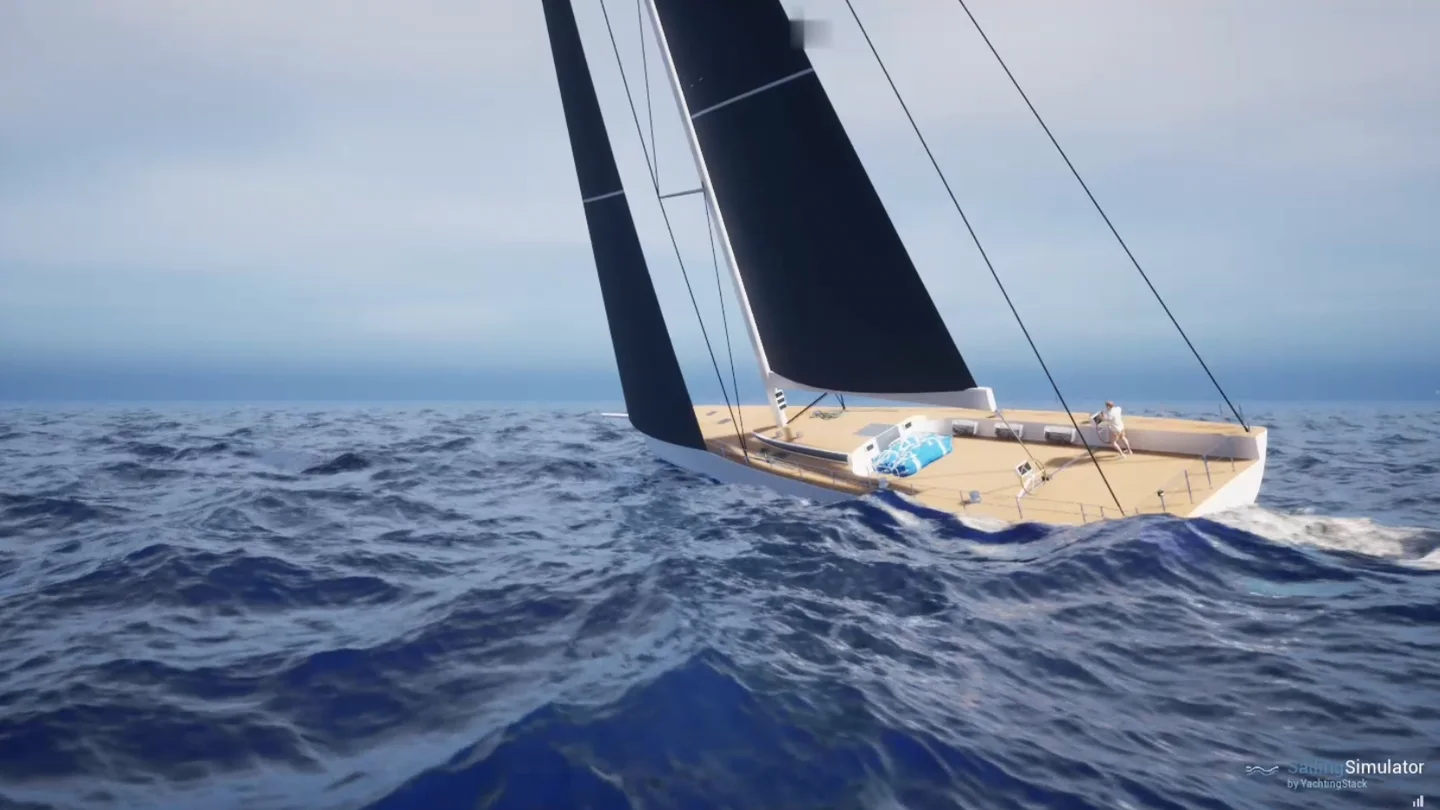
Two views of the boat, and the screen for the seat you are in — with the AI advisory in your headphones throughout, so what you are looking at, what you are hearing and what you are steering all agree.
And what you hold.
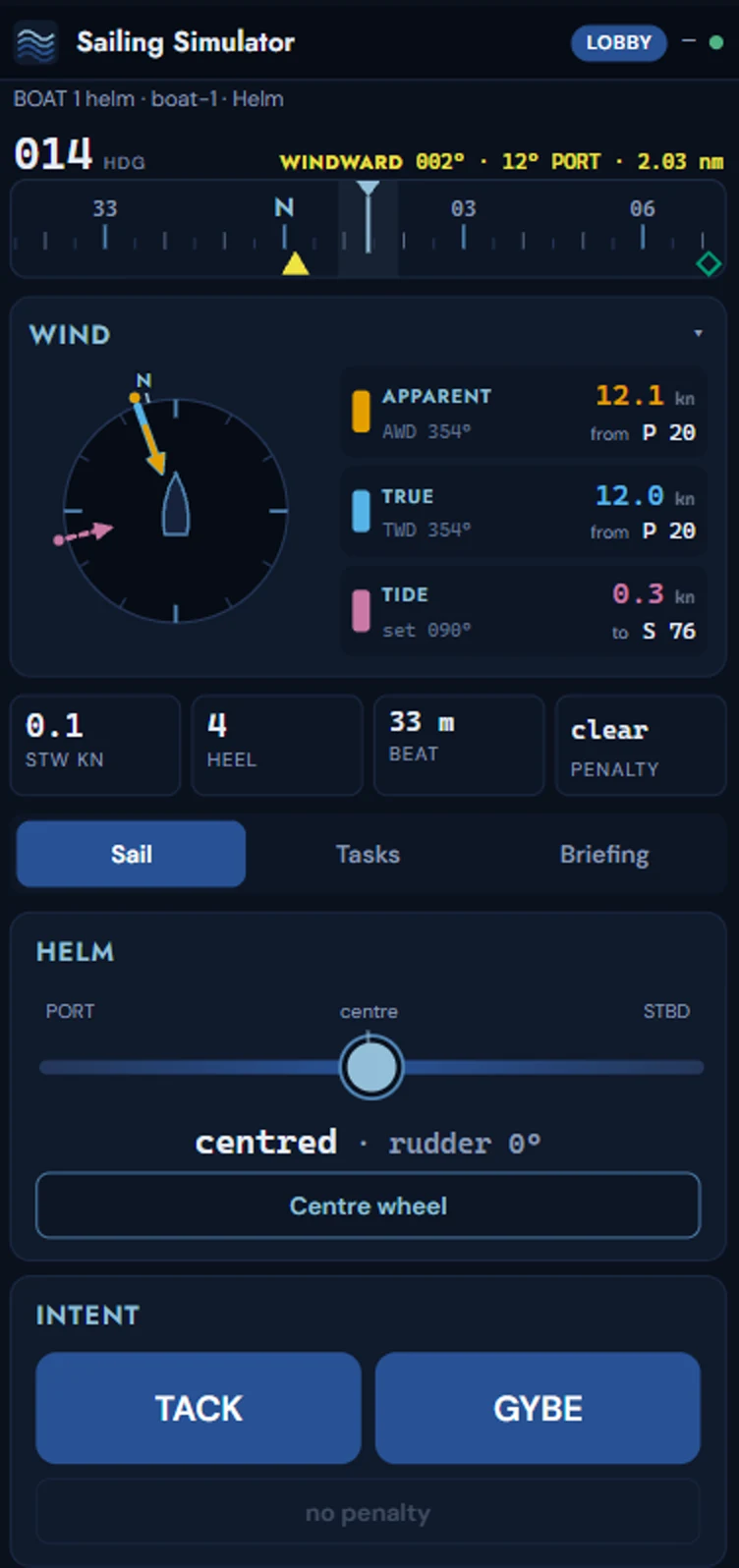
The screens carry the boat and the numbers. Your own device carries the controls and the card for the manoeuvre you are in.
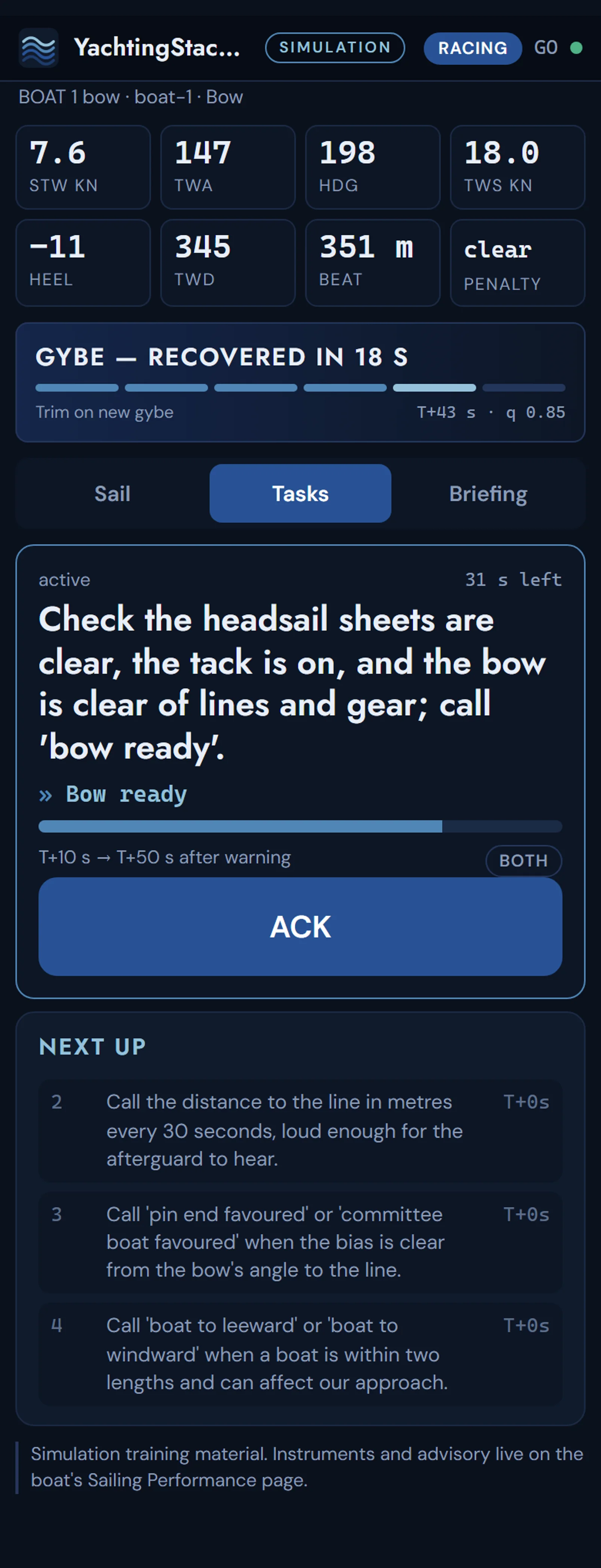
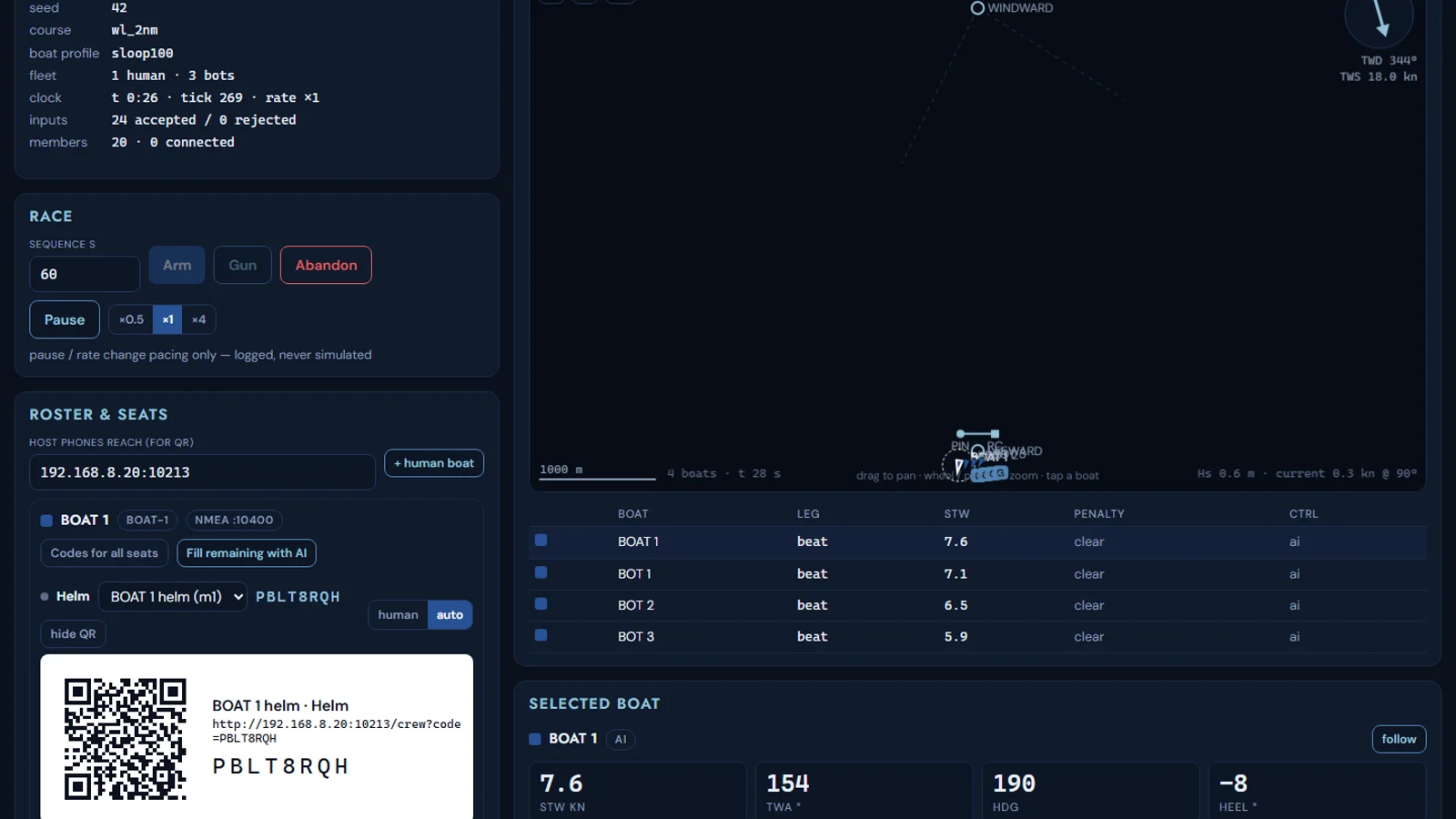
One administrator interface behind all of it.
Every boat, every seat and every call is centralised in one operator interface, and projected onto a central screen that cycles through the session for everyone in the room.
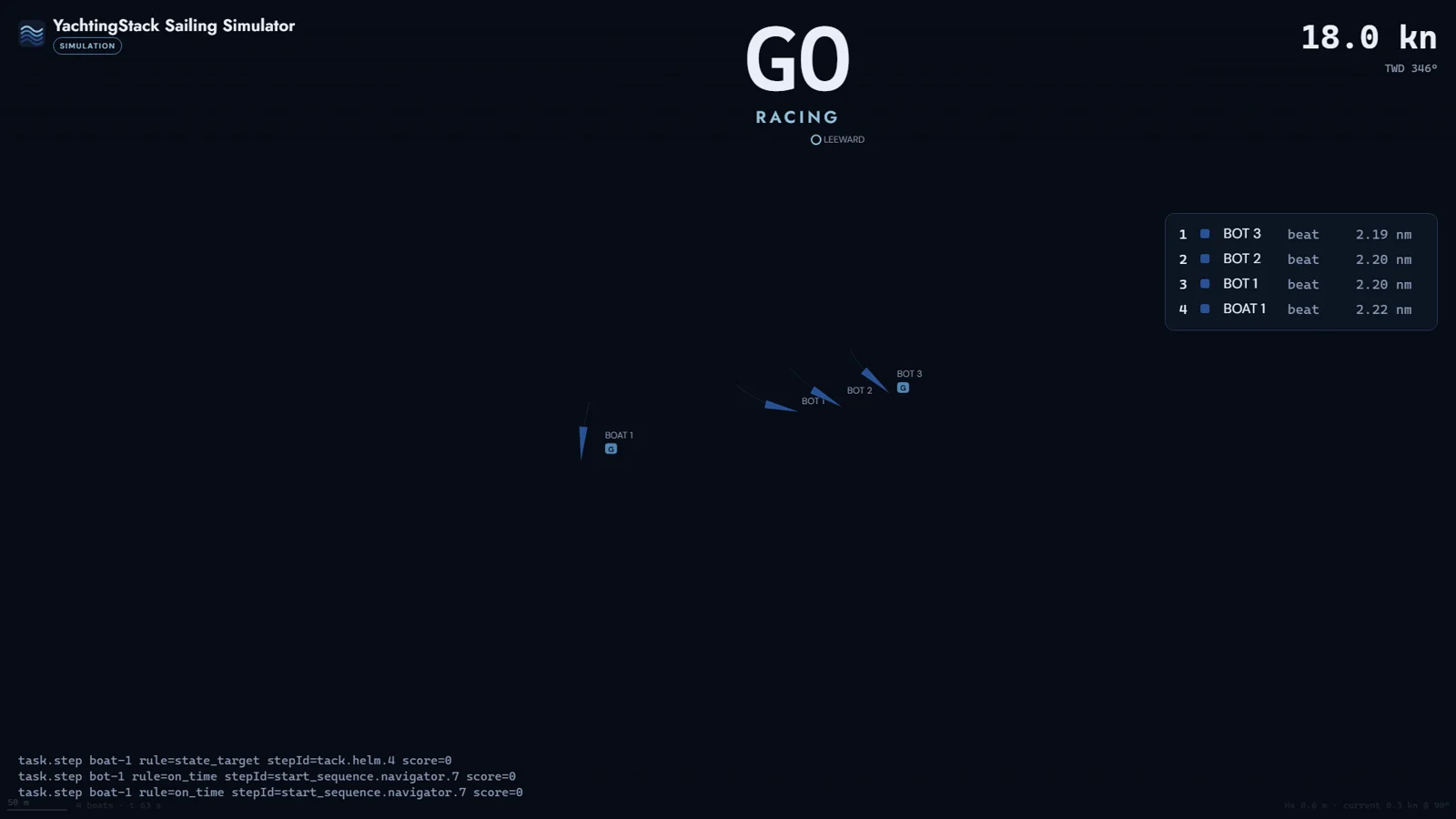
The boat, in the engine.
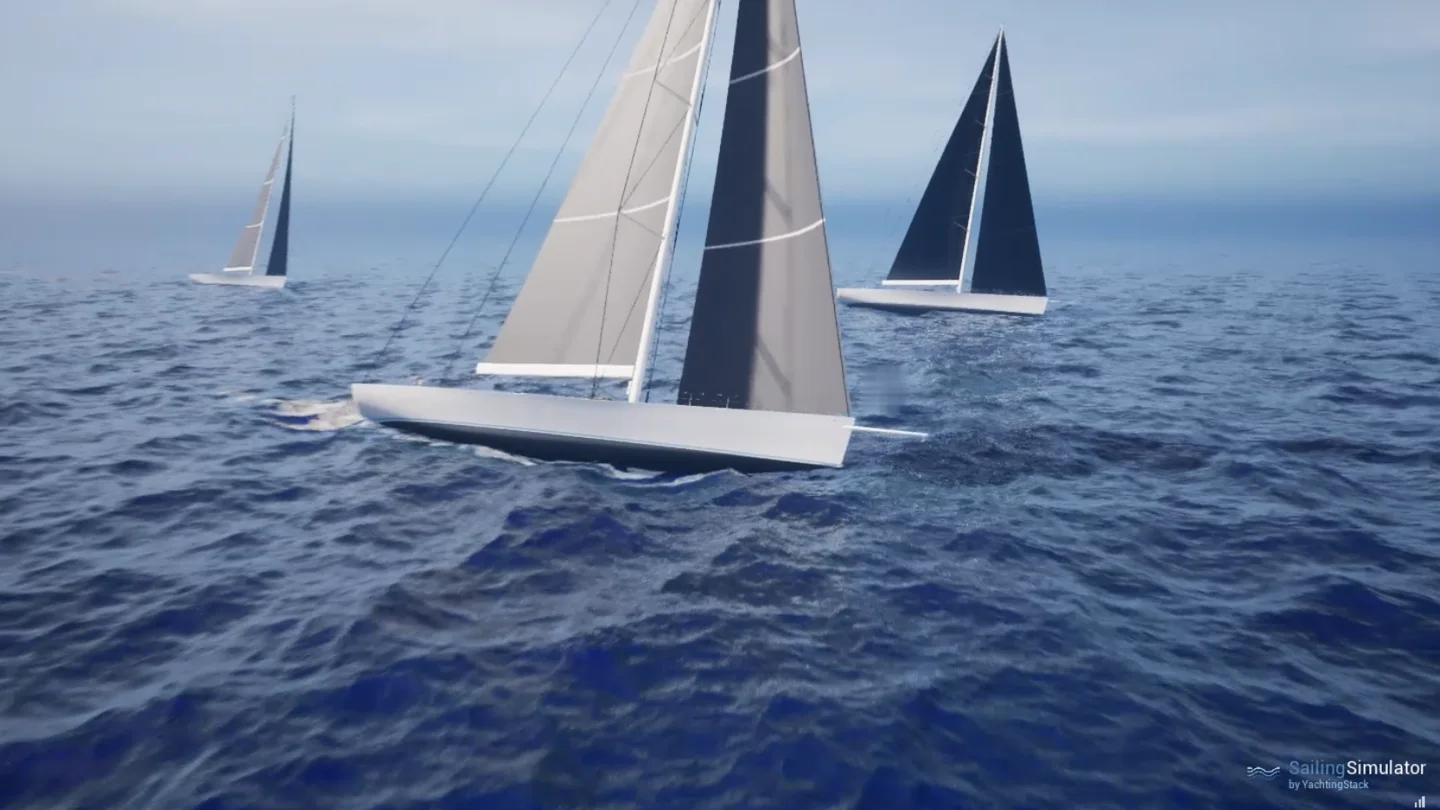
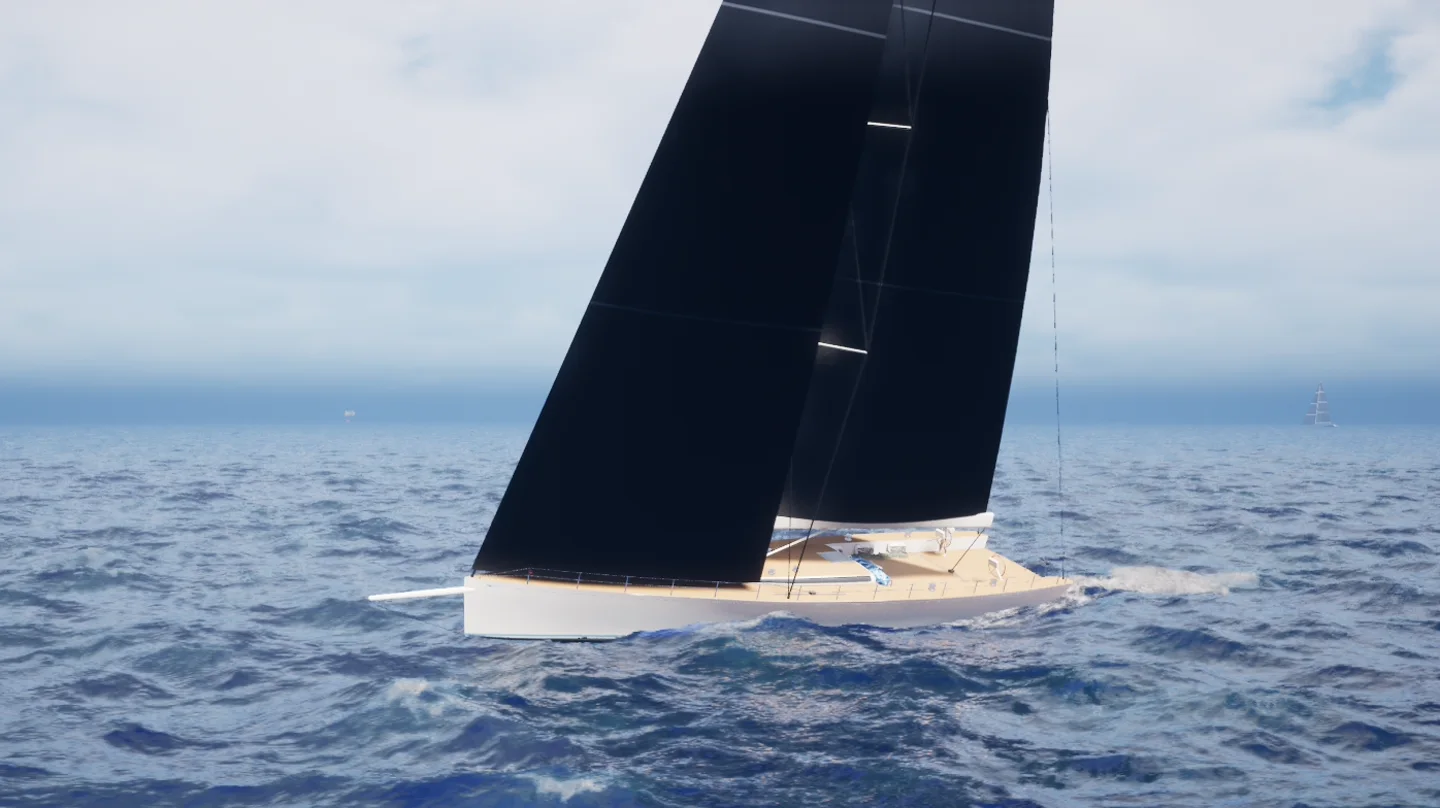
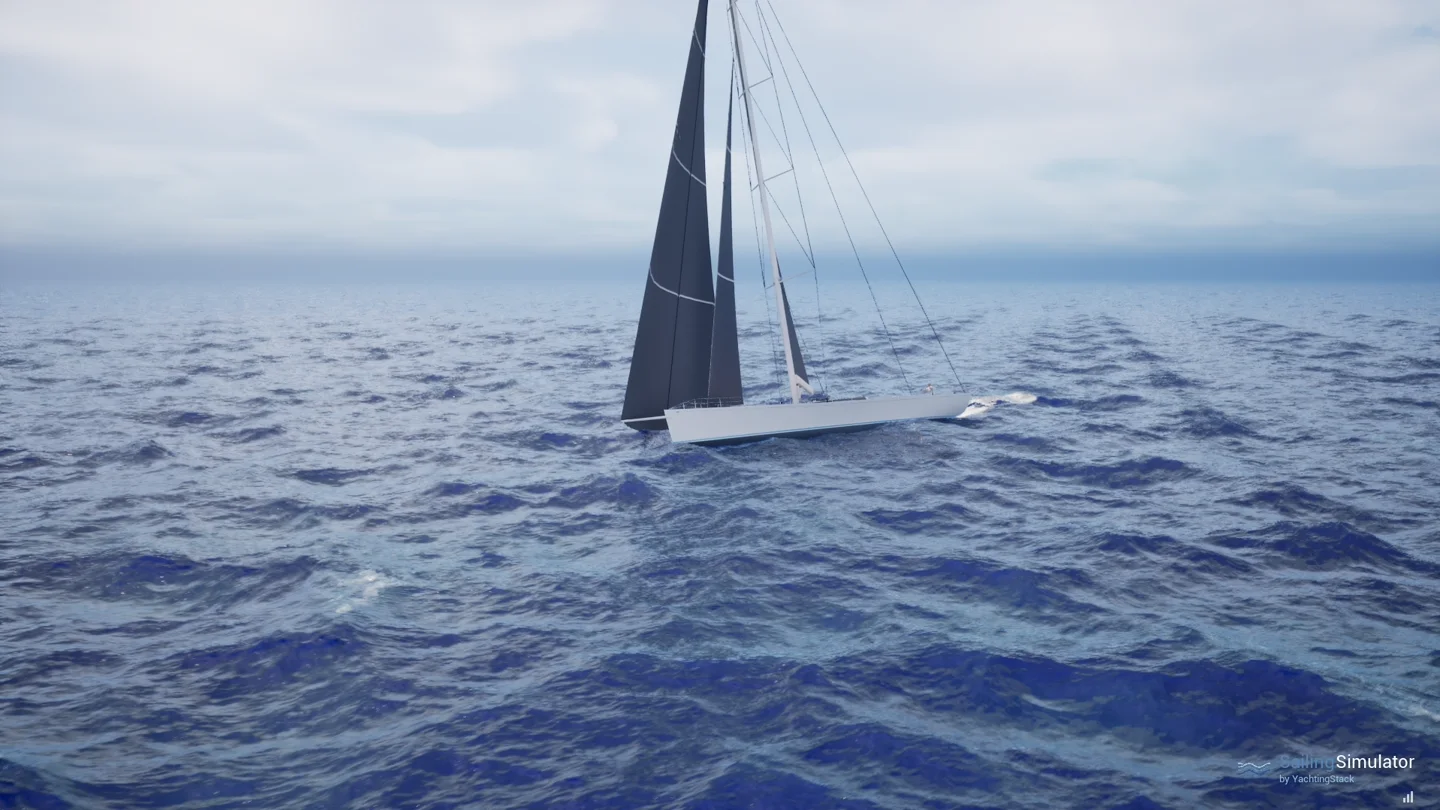
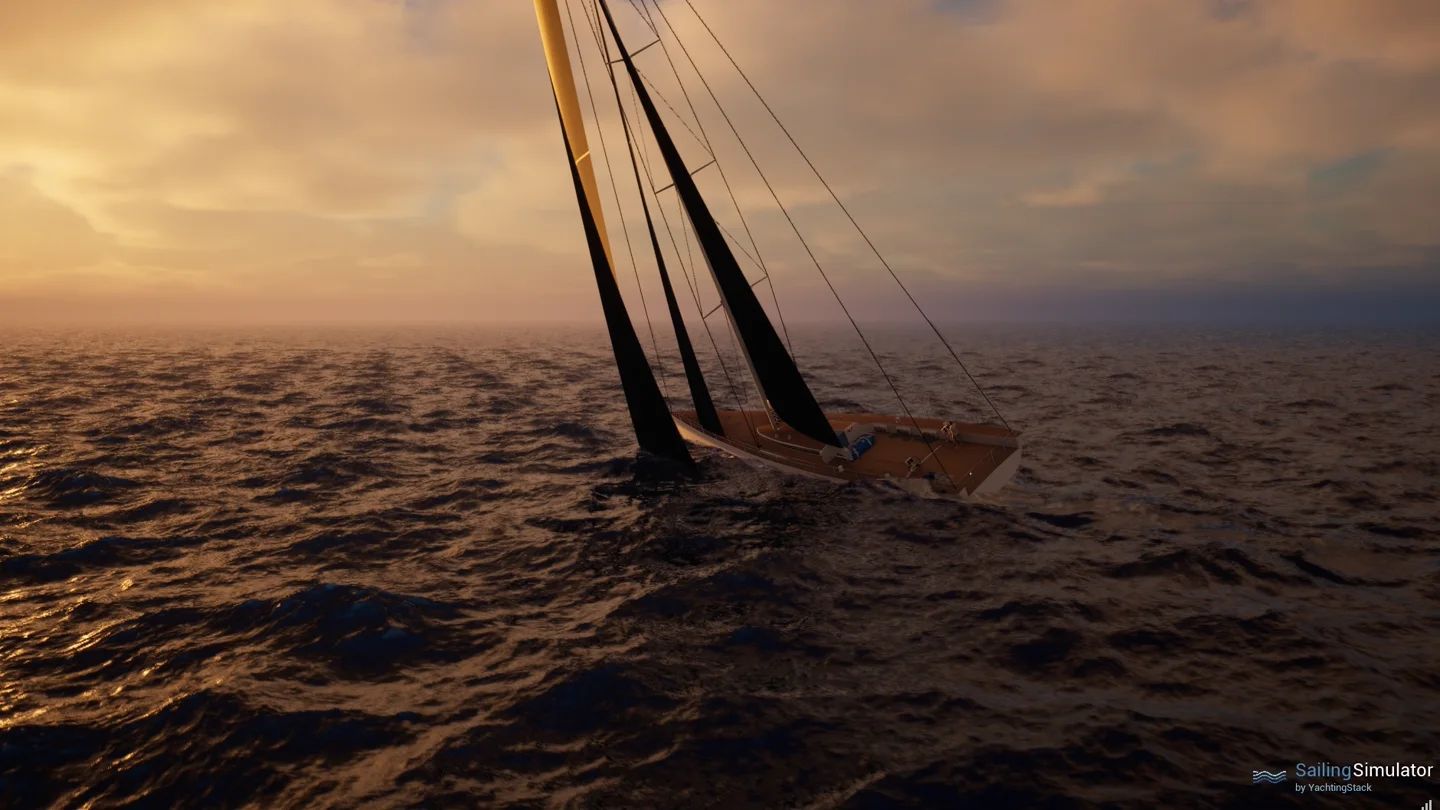
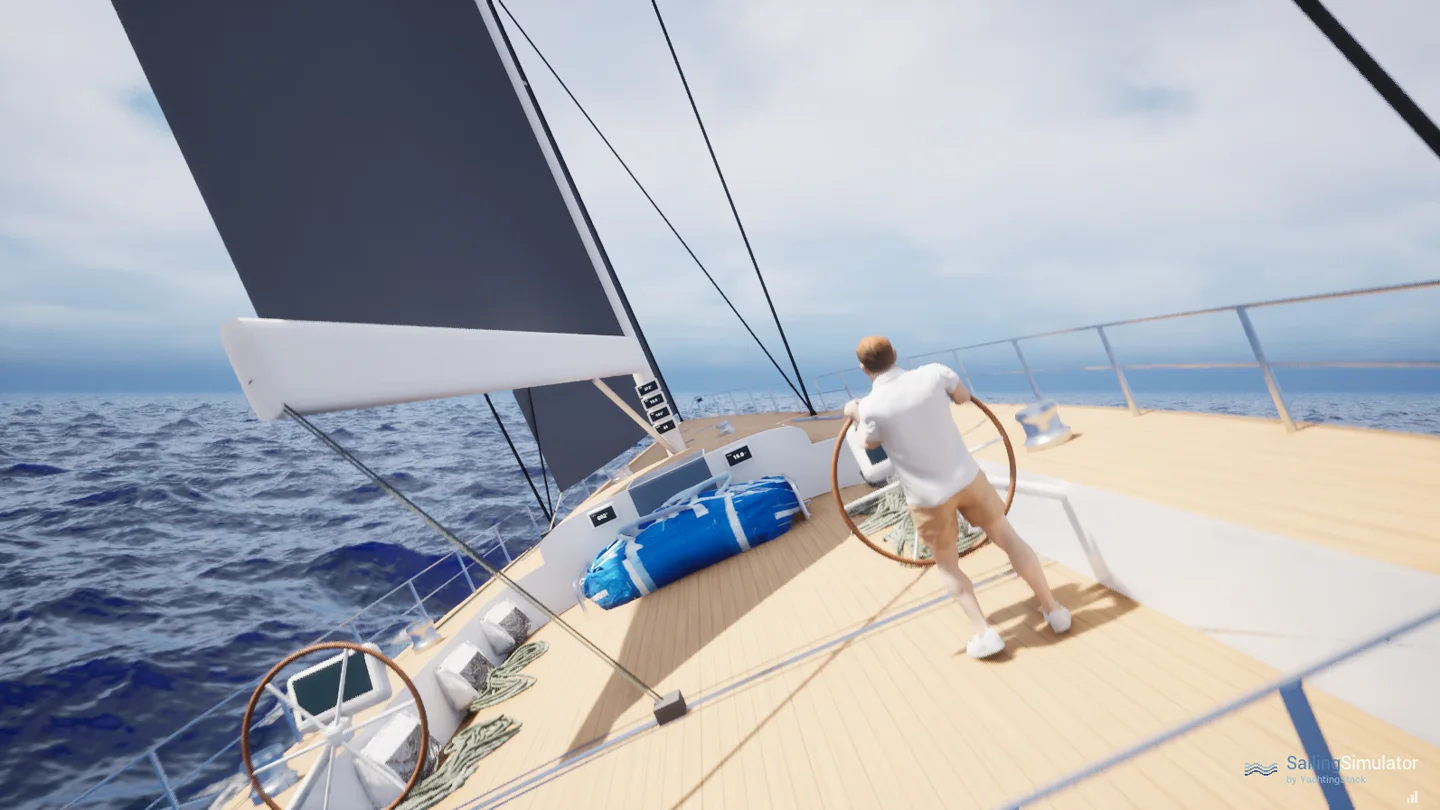
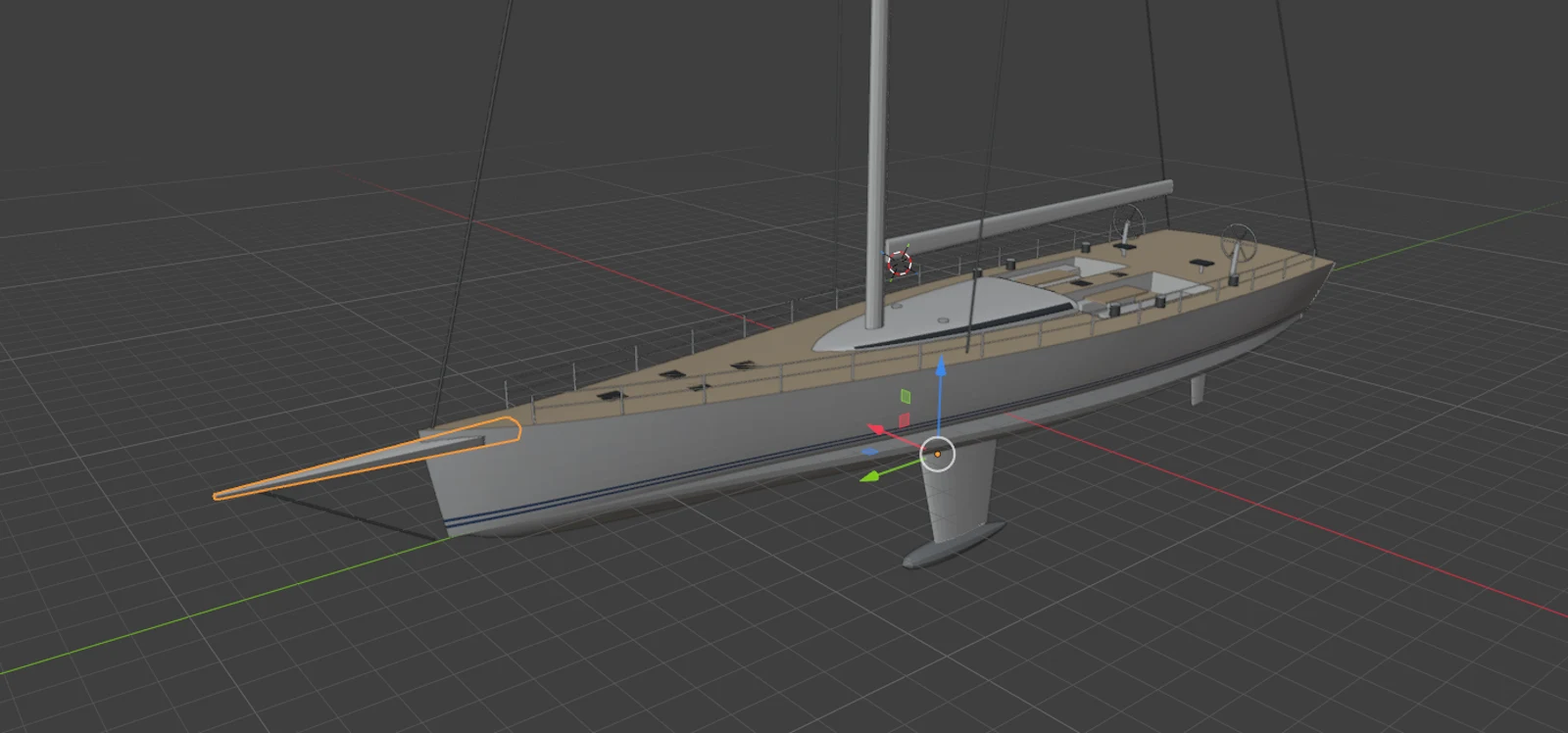
We are developing the 3D side with Unreal Engine 5, building interactive experiences from outside the boat and from on deck, for racing and for training. Captured from the engine as it runs, with the developer overlay taken out and nothing else touched.
Beyond 3D.
A picture of a boat is the easy part. What matters is that the air, the water and every line on deck are being simulated underneath it.
And the classics.
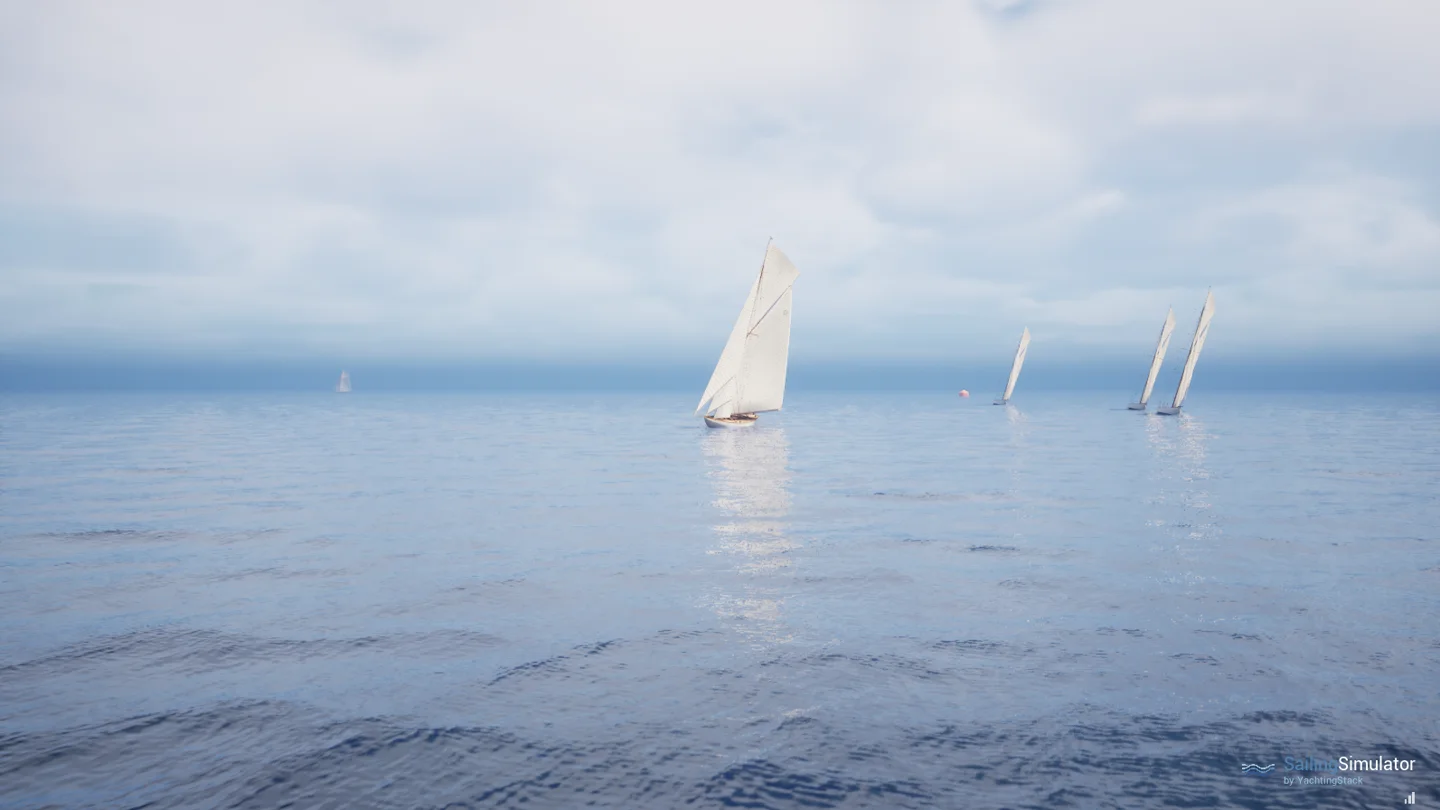
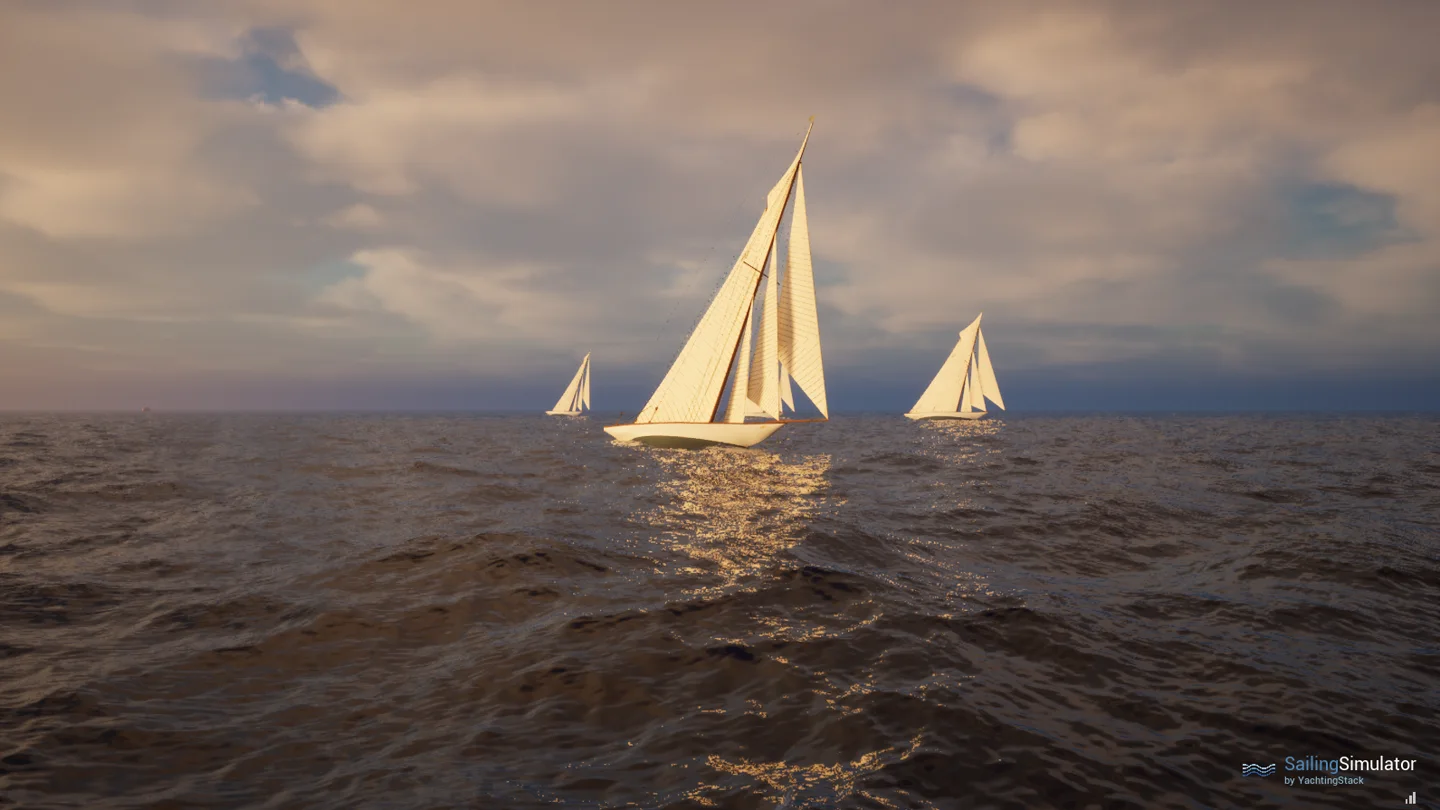
The same engine and the same water, under a rig from a century earlier.
More to come.
Also see: Sailing Advisor.
Aboard the boat, the same intelligence reads the instruments you already have and tells each crew member what their next decision needs — by screen, headphone or speaker.