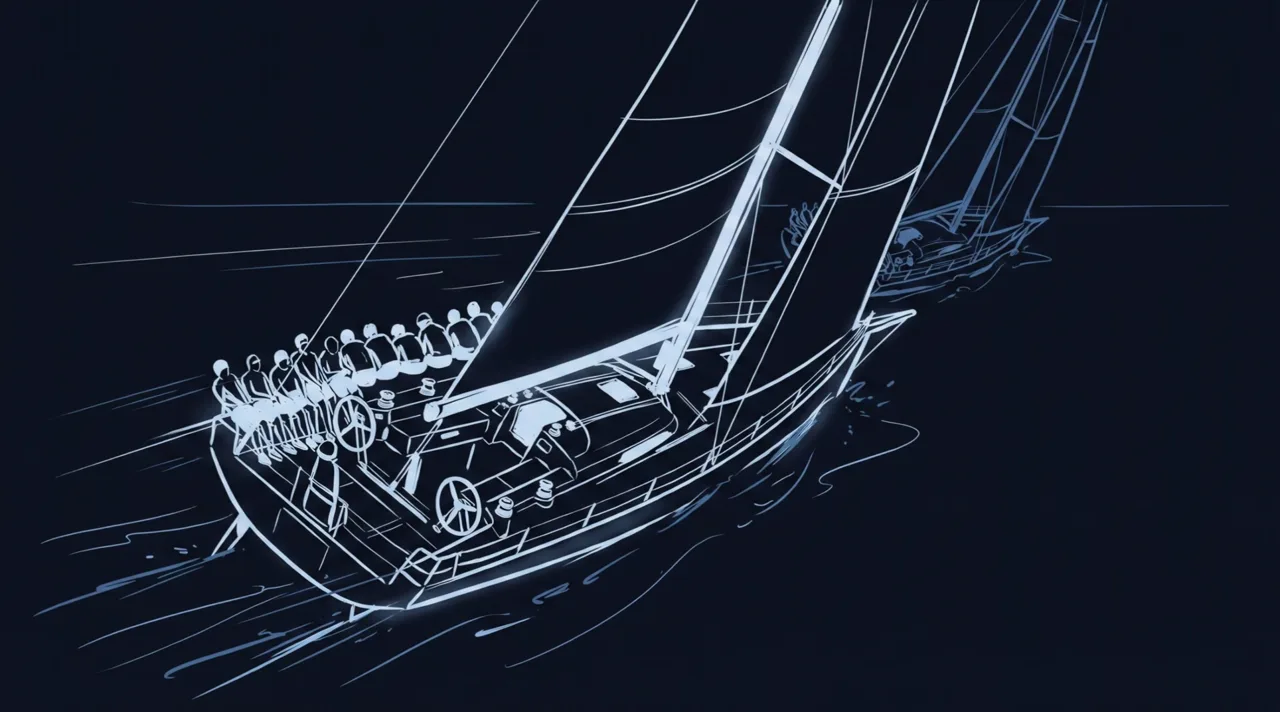
Instruments and sensors measure.Onboard AI interprets and communicates.Crew makes safer and better decisions.
Sailing Performance turns the data your boat already produces into feedback for the people sailing it — individually, by role, and as a crew.
Onboard AI that coaches the crew,
not just the boat.
Most sailing software shows you numbers and leaves the reading of them to you. Sailing Performance works out what they mean aboard, and says it to the one person whose next decision it changes.
- No refit — your existing NMEA network
- Runs entirely on the boat, fully offline
- Advisory only, receive-only by construction
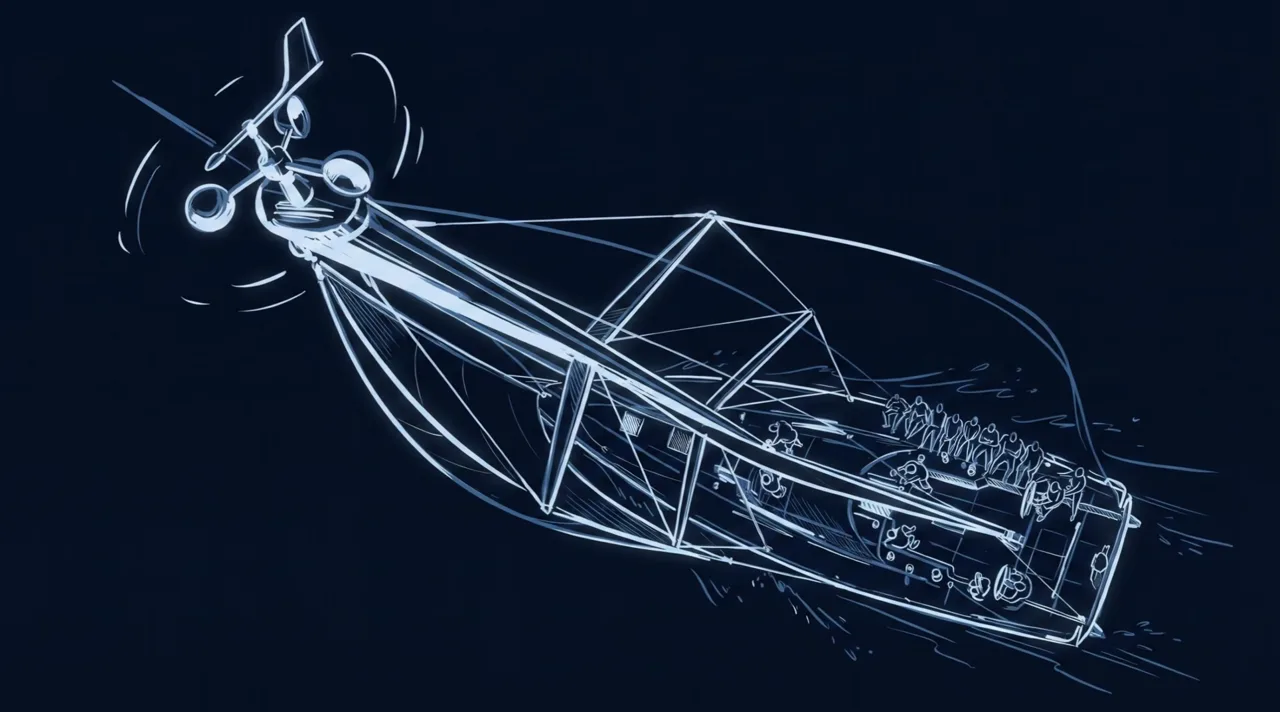
Your current instruments and data, now powered by local AI.
Masthead wind, boat speed, depth, heading — whatever is already on your network. Sailing Performance reads what you have and does the thinking on the boat, not in a data centre.
Sail the boat faster.
The race side: targets, shifts, and the cost of every manoeuvre.
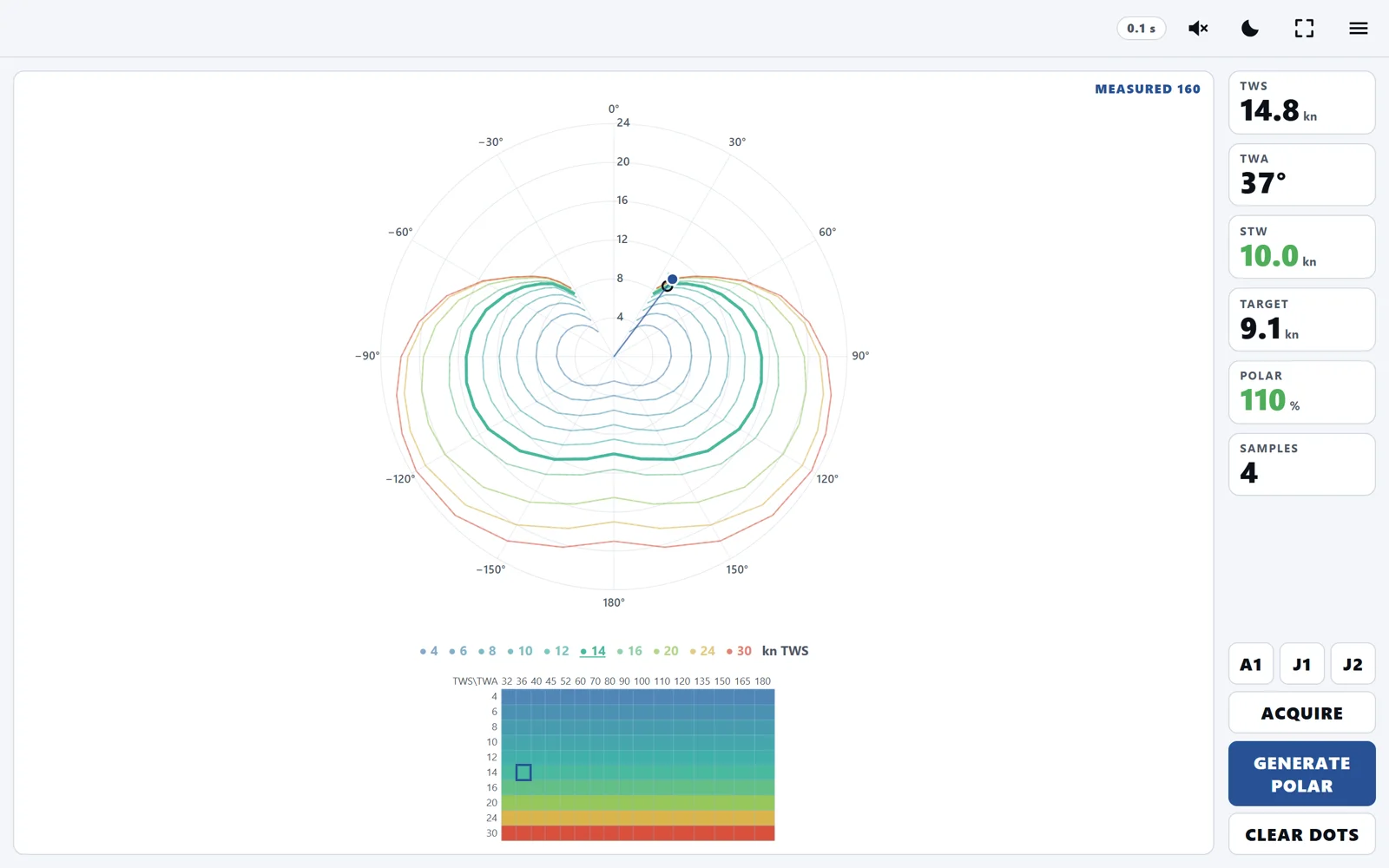
- Polar targets and VMGTarget speed and angle for the conditions, and how you are tracking against them.
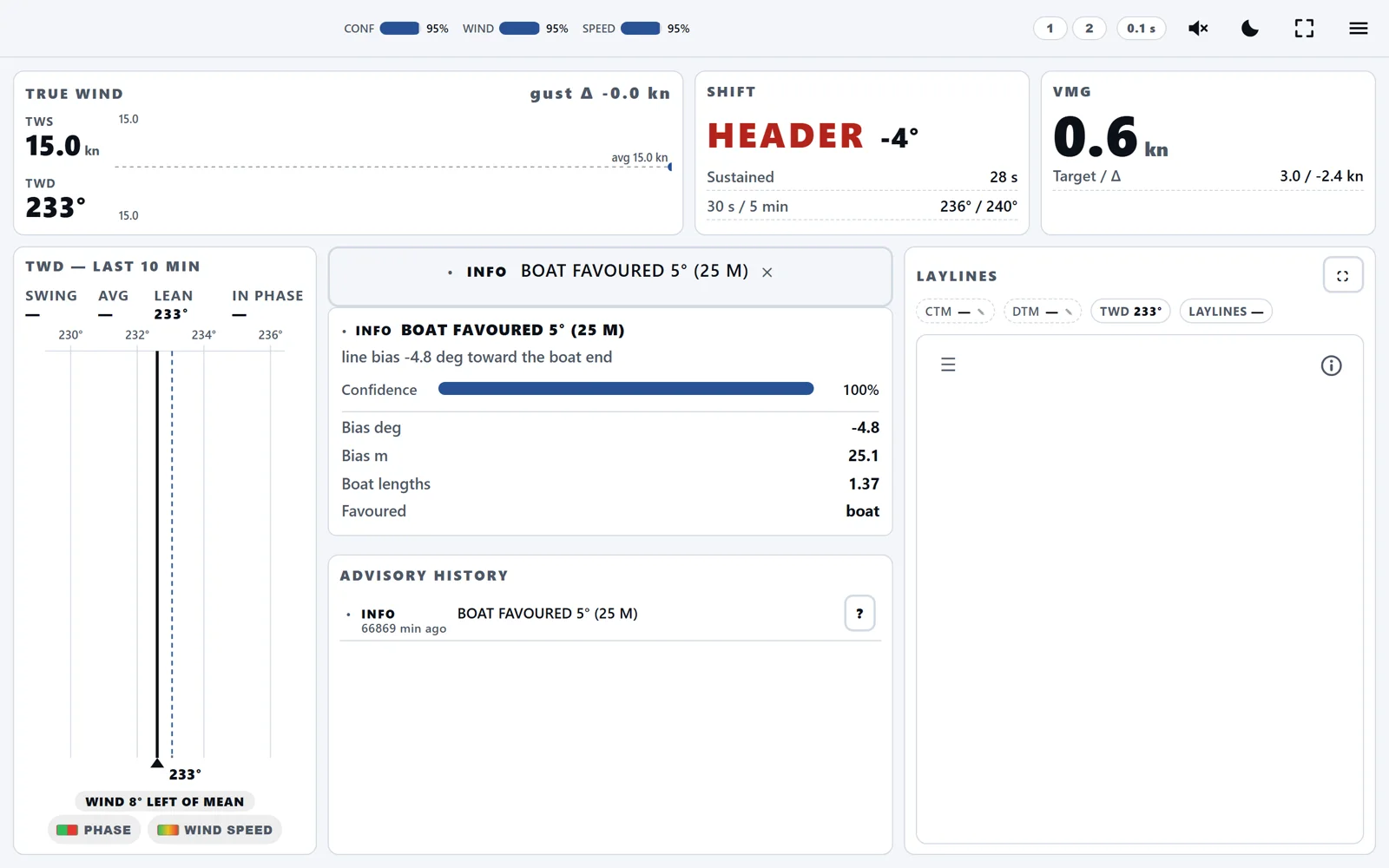
- Shift callsLift and header called as the breeze swings, with gust and lull separated from the trend.
- Manoeuvre analyticsEvery tack and gybe measured for recovery time and distance lost.
- Race geometry and laylinesWhere the corner is, and what the next leg looks like from here.
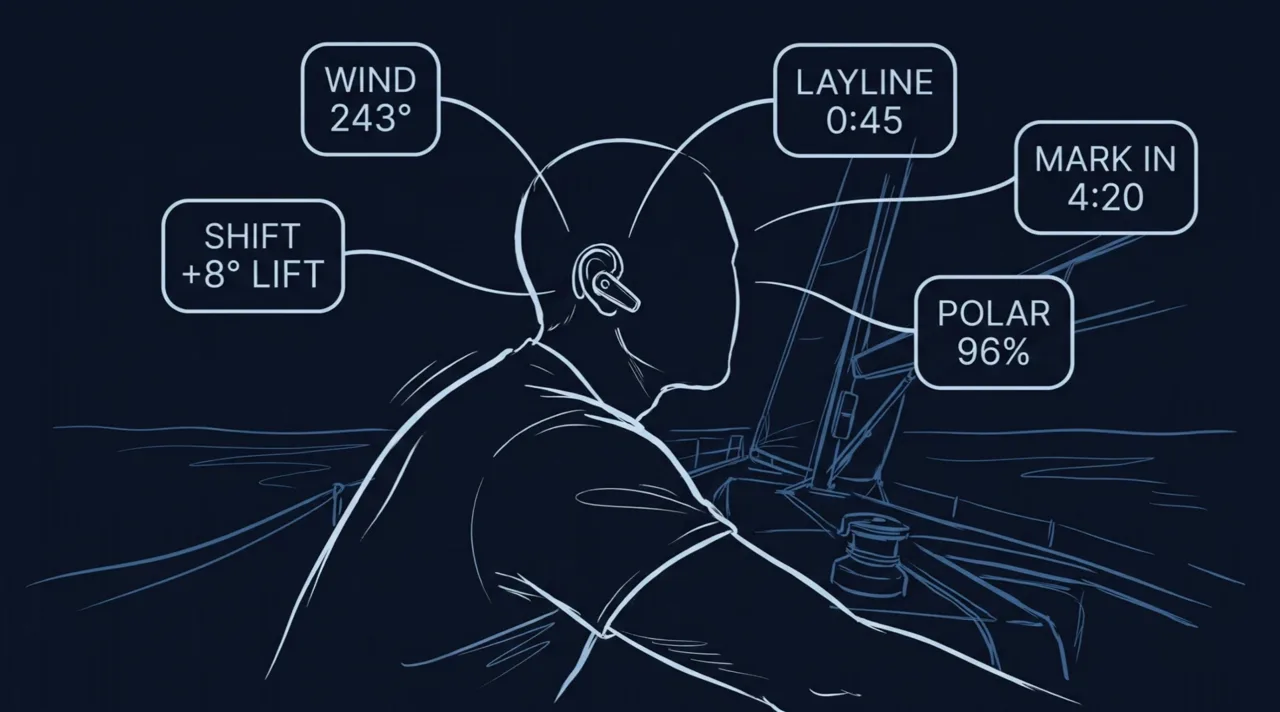
It talks to you.
Wind, shifts, laylines, time to the mark, polar percentage — called into your ear as it happens, so your eyes stay on the boat and the water.
Everyone hears what they need.
A screen is one route, not the only one. Calls go to the person whose job they change, in the form that suits where they are standing.
- Auditory firstScreen, headphone or speaker — whichever suits where a crew member is standing.
- Optimised information flowEach call routed to the people it affects, not broadcast to everyone.
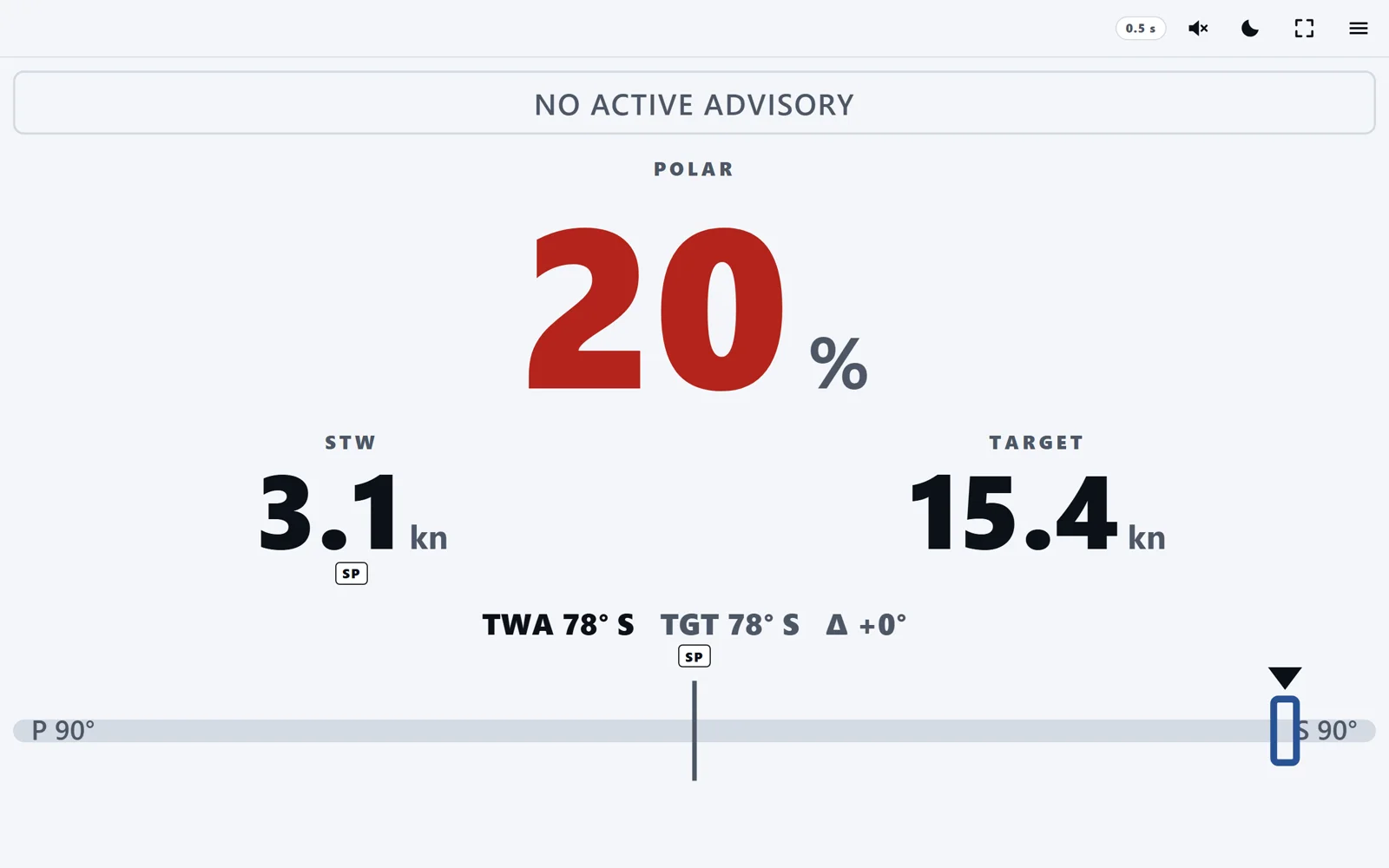
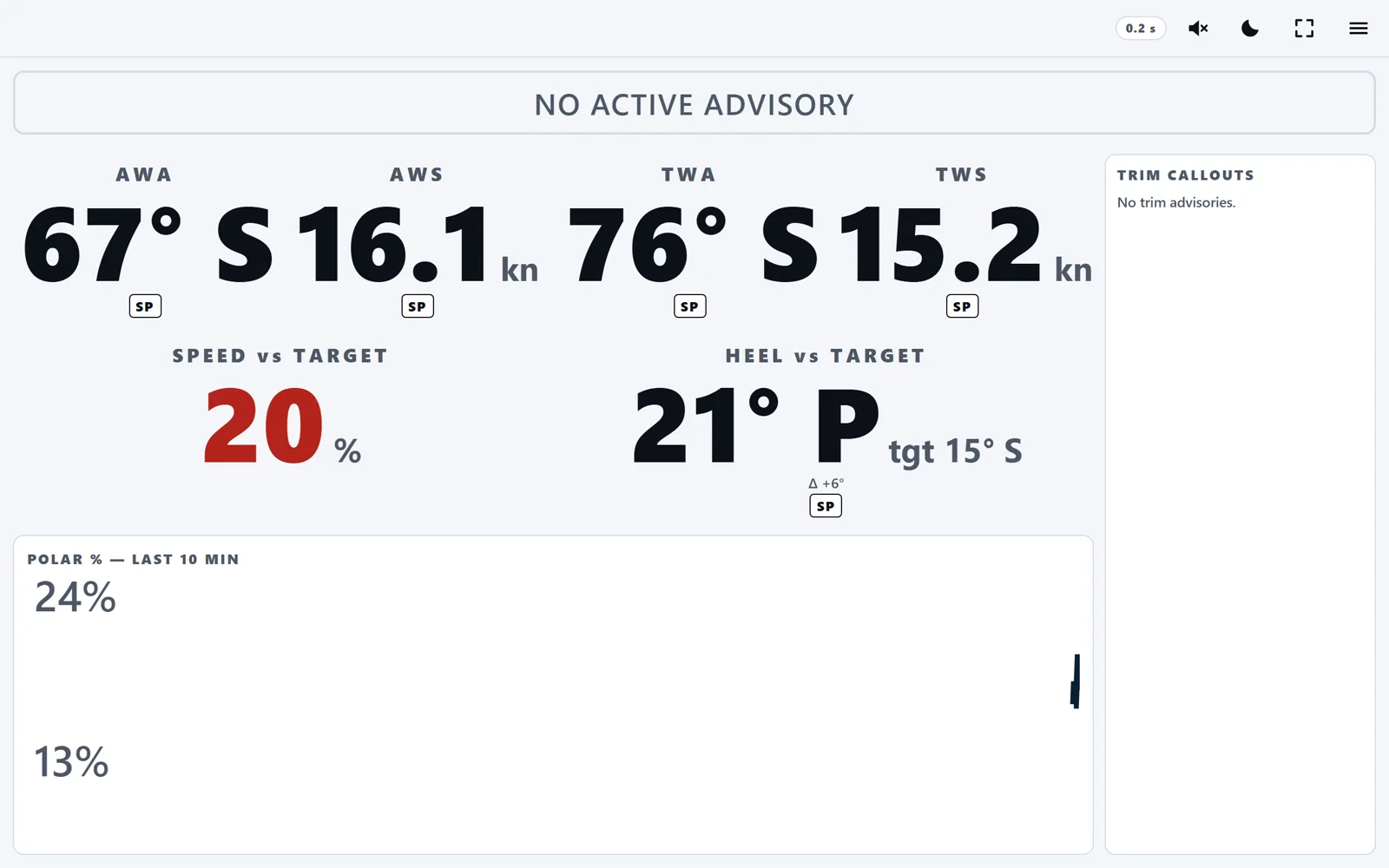
- A view per roleHelm, tactician, trimmer and bowman each get their own picture.
- Communication and safetyManoeuvre briefings, role checklists and SOPs, delivered when they matter.
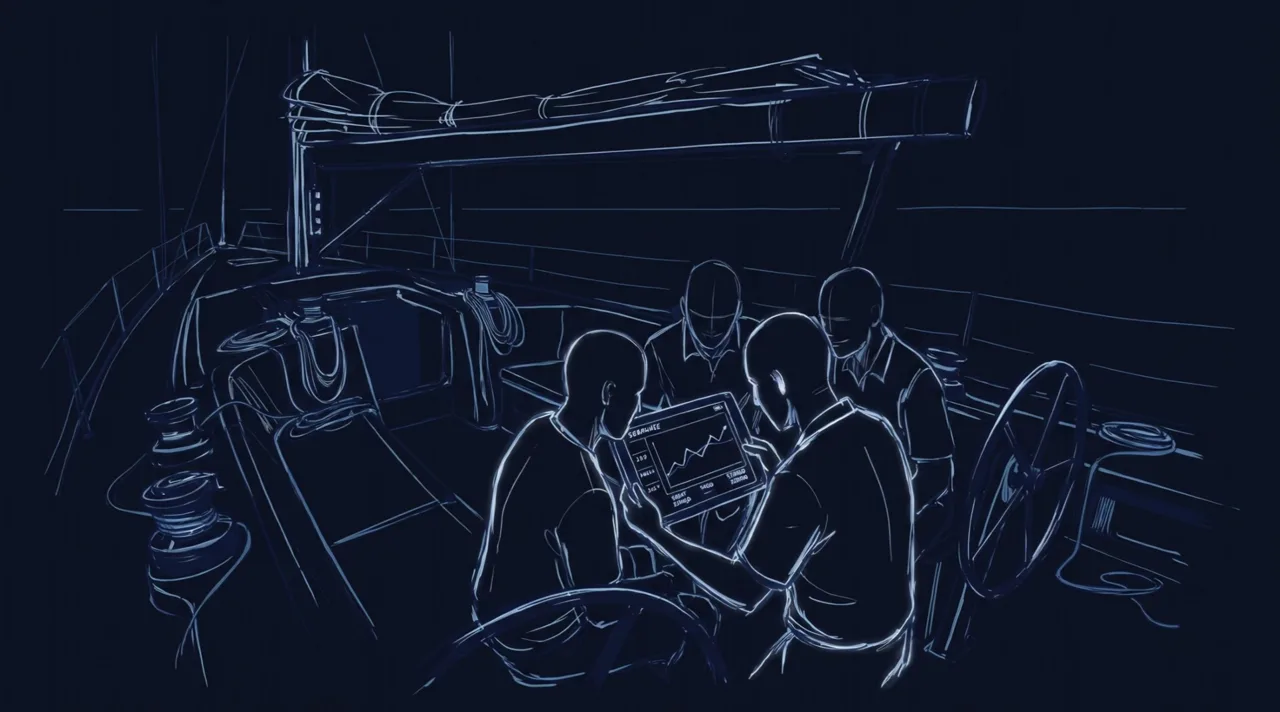
From the dock to the debrief.
Briefing before you leave, feedback while you sail, assessment when the sails come down — and the trend across a whole season. One programme, one record.
Run the programme around it.
Before the dock lines come off, and after the sails come down.
- Pre-race briefingThe plan, the course and the roles, shared before anyone leaves the dock.
- Post-race analyticsWhat happened — by leg, by manoeuvre and by person, across the season.
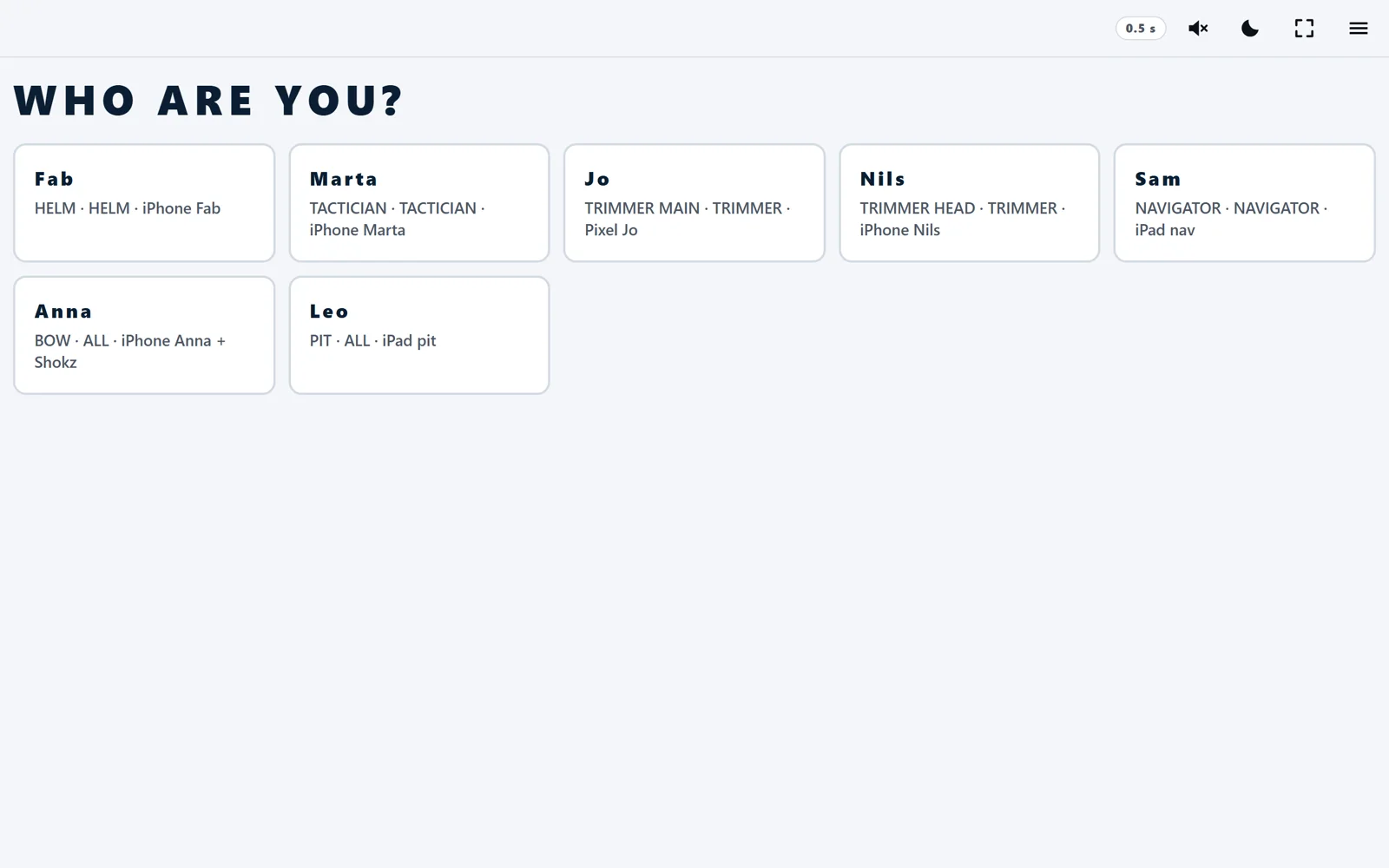
- Crew coordinationWho is aboard, their assignment, and the device each person is on.
- Runs entirely on the boatReceive-only and fully offline. It cannot write to your network.
A picture built for each position.
Role displays served to any browser on the boat's WiFi — sunlight-readable by day, red-on-black at night. Every call is also available as audio.
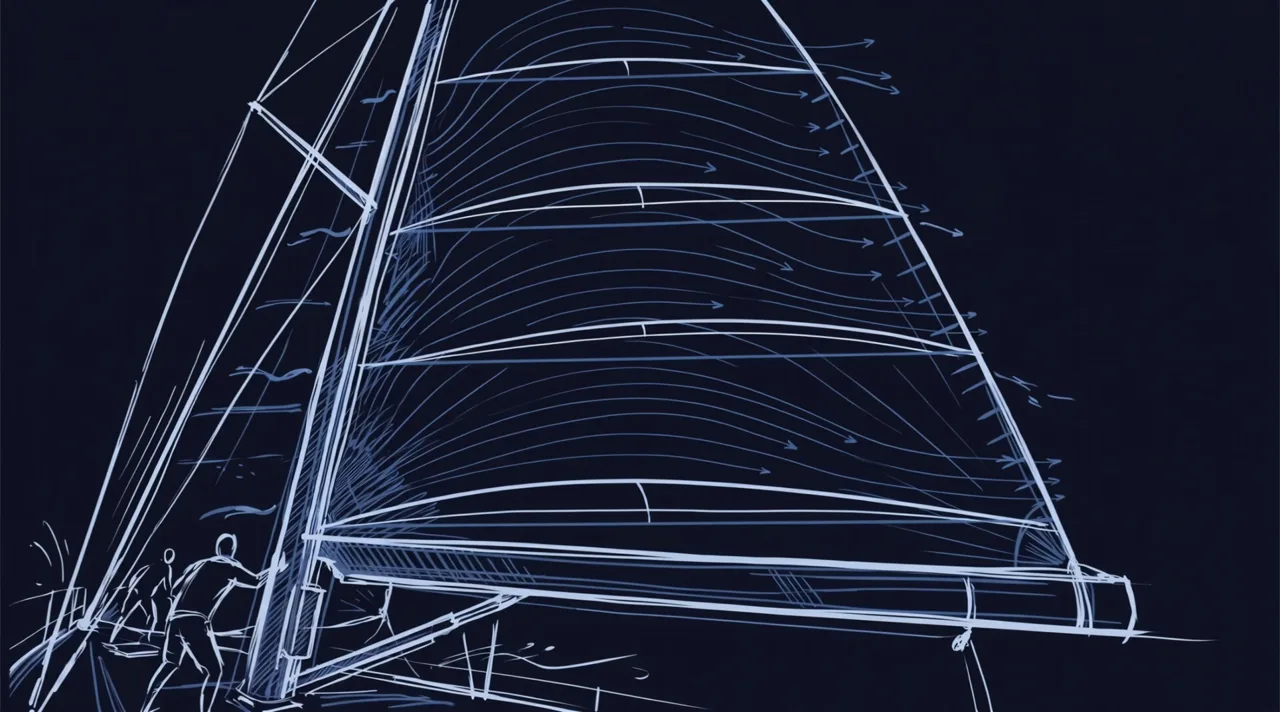
Polars from the trim you actually sailed.
Depth, twist and entry angle read off the sail at every height, with the airflow across it — so the polar you are measured against comes from how the boat was really set up that day, not a number from a table.
Polars from the trim you actually sailed.
Depth, twist and entry angle are read off the sail at every height, with the airflow across it. So the curve you are measured against is built from how the boat was really set up that day — not a number from a table.
Your polar, and what you did against it.
The curve the boat is capable of, and the record of how close you actually got to it — session by session, across the season.
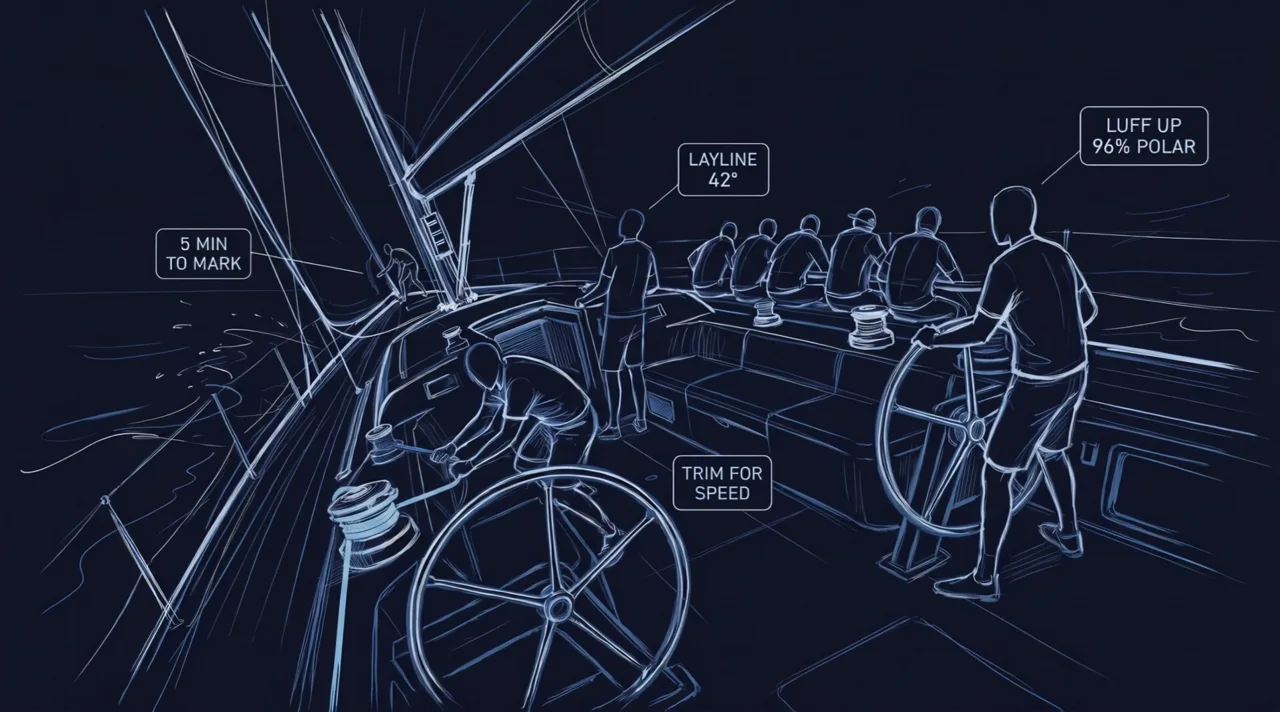
AI-powered feedback that knows your role onboard.
Before, during and after the race: dedicated briefings, day and night customisable displays, and audio advisory carrying what is relevant to your role while you are sailing.
Read the boat. Think aboard.
Tell the right person.
Data is normalised, analysed and put through inference on the boat, then each conclusion is routed to the people it actually affects.
Nothing leaves the boat, and nothing is invented: an input that goes stale produces an explicit unavailable state rather than a guess.
On whatever you already have aboard.
The same call reaches each person the way that suits where they are standing. What works at the bow is not what works at the nav station.
- Smartwatches
- Phones
- Bluetooth earpieces
- Fixed onboard displays
- Tablets and temporary screens
Everything is served as web pages on the boat’s own network, so a programme runs on existing and consumer hardware, and on temporary fixtures added for a regatta and taken off afterwards — cameras, speakers, tablets, phones, smartwatches and laptops. The one real constraint is battery: over a long day, keeping personal devices alive is what needs planning, not the software.
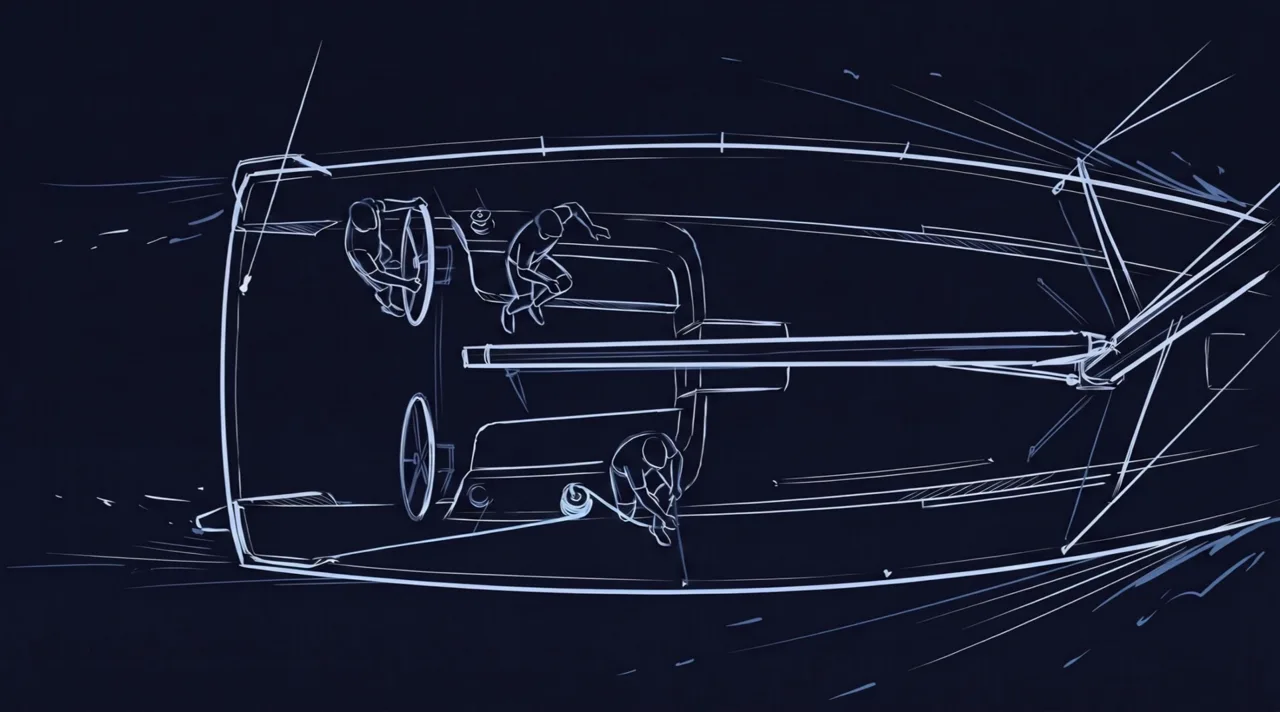
See it on your own boat.
Tell us about the programme and the instruments you already have. We will come back with what a trial looks like aboard — and, just as usefully, what it would not do.
Also see: onshore simulation.
The same engines that read a real yacht drive our simulator, so a whole crew can sail the regatta ashore — every role, every boat — before they sail it for real.